
Feature by Brad Balfour
Where: the New York City Fire Museum
Address: 278 Spring Street
New York, N.Y.
Phone: (212) 691-1303
Open 5 days a week,
Wednesday- Sunday
10:00am to 5:00pm
Closed on major holidays
With another anniversary of the 9/11 attack coming up just at the start of the fall season, it focuses us to reflect on how things have changed and how they’ve stayed the same. Before we plunge in a season of the new, it prompts contemplation. In order to not re-litigate all the concerns forced by that momentous event, a notice of an exhibition at the New York City Fire Museum downtown on Spring Street provides that opportunity to recall.
As New York City and the world commemorate the 22nd anniversary of the 9/11 devastation, the museum presents “Recovery and Reflection, Celebrating the 9/11 Tribute Museum.” The temporary exhibition will be on display through October 15th, 2023.
This special exhibition features 15 panels that were previously on display at the 9/11 Tribute Museum, which was founded by the September 11th Families’ Association but had closed in August 2022. Spread over four panels are the victims’ names; additional panels display photos with quotes from key FDNY members, such as the former New York City Fire Commissioners Daniel Nigro and Sal Cassano, as well as firefighter Lee Ielpi. Visitors also can see a slideshow of photos illustrating the heroic acts of that day and the aftermath, photos of tributes that sprung up around firehouses after 9/11, as well as a short video of retired firefighter Bill Spade — who served with the FDNY from January 1985 to March 2003. Spade is the only firefighter from Rescue 5 who made it home that day.
Said the New York City Fire Museum Director Jennifer Brown, “The 9/11 Tribute Museum [which] opened in 2006, held a special place in our city’s heart; it allowed visitors to learn about the events of 9/11 from a personal perspective, to mourn and to reflect, and this exhibition is a meaningful way to honor its part in our recovery and resilience.”
Visitors also can pay tribute in the Fire Museum’s permanent 9/11 Memorial Room. The memorial is the first permanent space dedicated to the 343 members of the FDNY who lost their lives on 9/11. It features a black marble and tile structure with pictures of the firefighters lost in the attacks. There are cases displaying tools used and items recovered from the Ground Zero recovery effort and a wall-size timeline chronicling that day’s tragic events.
The New York City Fire Museum will mark the 22nd anniversary of the September 11th terrorist attacks with a commemorative wreath-laying ceremony in its 9/11 Memorial Room on Monday, September 11, 2023, at 11:30 AM. The program will include remarks from FDNY leadership as well as the Color Guard, chaplain, and vocalist.
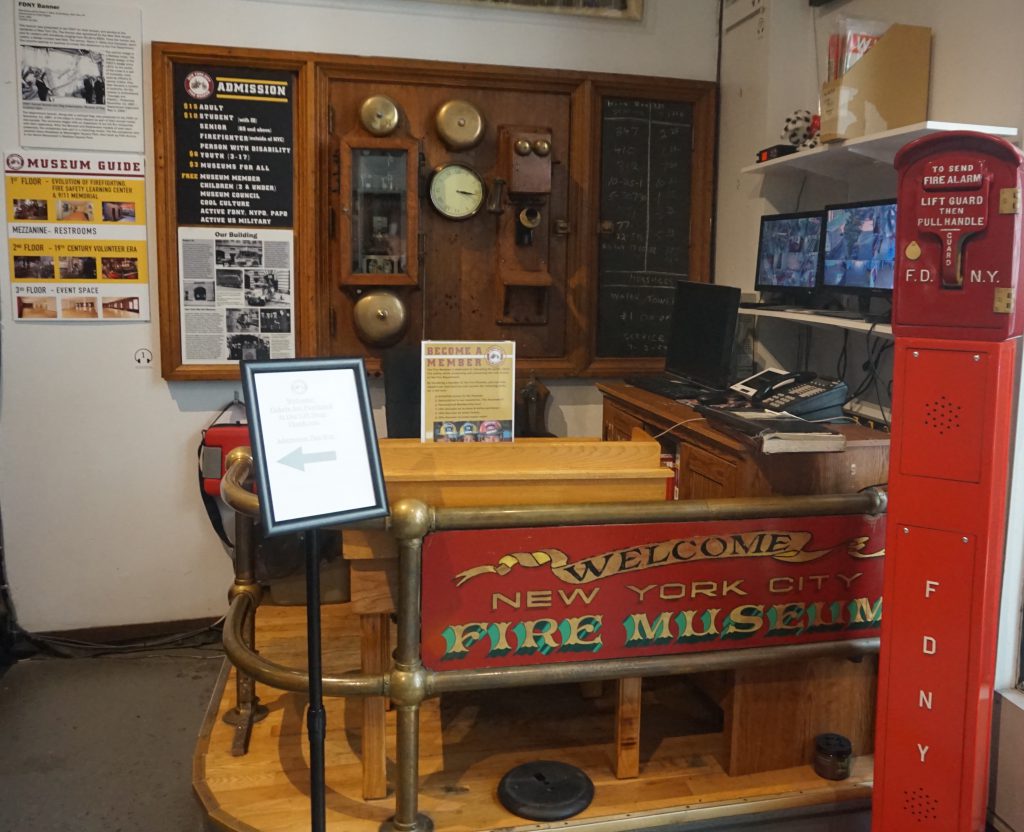
The Museum is located at 278 Spring Street between Varick and Hudson Streets, in the former quarters of the FDNY’s Engine Company No. 30, a renovated 1904 firehouse.
In order to get some insight and perspective before 9/11, Brown and curator Sean Britton invited me to see the museum, learn about who they are and trial and tribulation of of a cultural institution recovering after the two year plus pause of a pandemic pullback. They first grounded me in just how they got involved with the museum in the first place.
Q: How did you come to New York from Dayton, Ohio, your hometown?
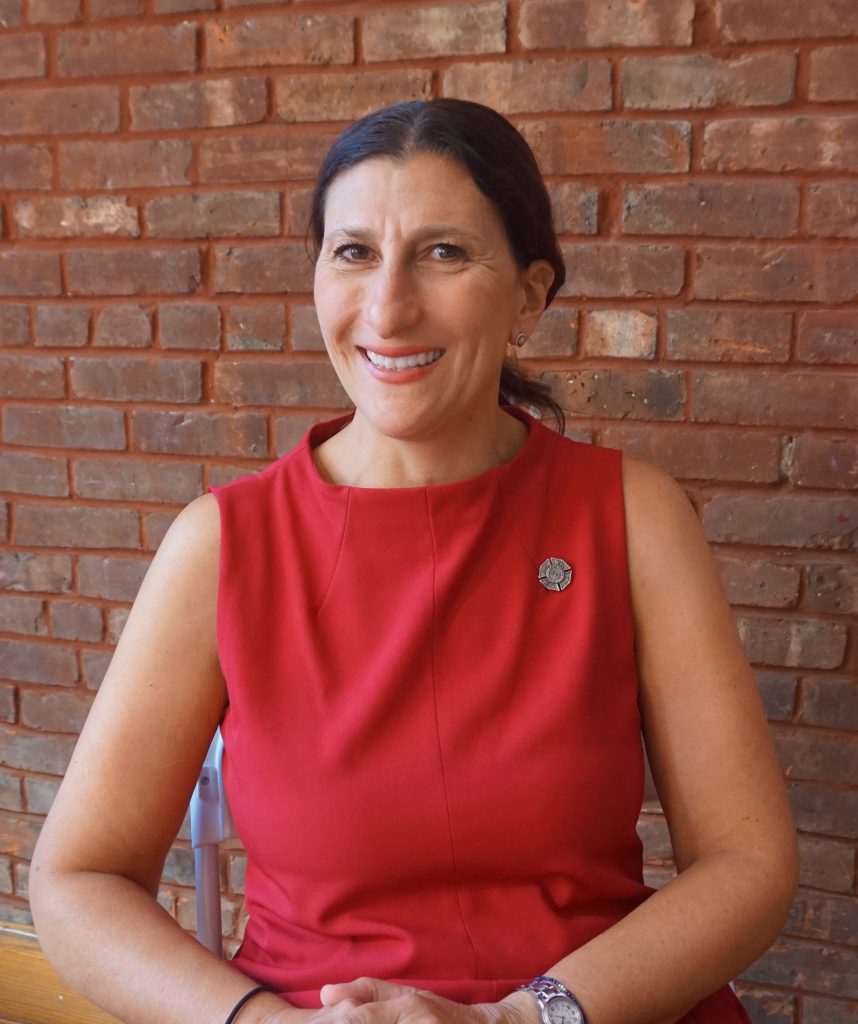
Jennifer Brown: I actually came in a U haul truck for graduate school at NYU.
Q: What did you come here to study?
Jennifer Brown: Public administration.
Q: Did you always intend that that would lead to working on a museum?
Jennifer Brown: No. In fact, I worked for many years in community-based economic development. So this is actually my first museum role.
Q: How different is that from community development?
Jennifer Brown: It depends. I think there’s a lot of crossover. We do public programming here and I’ve done a lot of that. There’s obviously stakeholder engagement. We have members, we have a volunteer board and we’re a public/private partnership with the fire department. Some of the nonprofits I had worked at in the past were public/private partnerships, but on the economic development side. So, there’s a lot of overlap except for what Sean does, the curatorial is the non overlap.
Q: Exactly who is Sean Britton and how is he involved?
Jennifer Brown: Sean is both our curator and collections manager because we’re small. Sean does both roles — he manages our collections and the archive of everything that we have related to FDNY history and the fire service dating back to 1620. What we have been doing in the last two calendar years is a series of rotating exhibits each year —three usually — and we decided that we would do one during the month of September that would relate to the commemoration of the 9/11 attacks. We did a really amazing one a year ago with a photographer named Richard Wiesel who had done a project where he took very beautiful poignant photos of family members of 9/11 victims with personal artifacts of the individual who was killed that day. And then he did short interviews with the family members. We displayed his work a year ago.
Q: How did you meet him?
Sean Britton: His agent got in touch with us and wanted to know if we were interested in highlighting his exhibit. So we had many, many hours of zoom calls with Richard because this started during COVID. He’s actually Elie Wiesel’s cousin [Wiesel was a Romanian-born American writer, professor, political activist, Nobel laureate, and Holocaust survivor].
Jennifer Brown: His work is really interesting because he photographed Holocaust survivors. He was wonderful, just really enthusiastic about being able to display his work here. Of course, he focused not only on firefighter families but on broader 9/11 families. And we displayed the photos and videos that were related to FDNY, obviously, because we are the FDNY Museum. But his body of work is much broader than that.
Q: So where did you grow up?
Sean Britton: Staten Island
Q: That’s a haven for firefighters.
Sean Britton: You’re not kidding. But my neighbor on the left was a fireman who was killed on 9/11. Staten Island probably had the most firemen from one central location that died on 9/11.
Q: Why did you decide to join the museum?
Jennifer Brown: they were looking for someone and I was looking for something…
Q: How did they find you,
Sean Britton: the modern way of employment…
Jennifer Brown: Linkedin.
Q: You decided that you had the administrative experience to do something like this as opposed to what you were doing?
Jennifer Brown: I had run smaller nonprofits before, actually larger than this, but smallish. This is pretty small. So, from that perspective and from the nonprofit management perspective and from the public private partnership perspective and programming and all of those things, stakeholder engagement, I felt pretty solid on that. What I definitely lacked on the FDNY specific history and the curatorial, that’s why we have Sean. He’s only been here for four years but he has truly picked up very extensively and, in relatively quick amount of time, done a real deep dive not only into the collection — which we have thousands and thousands of things cataloged in it — but also the history and nature of the fire department, firehouses and how everything works. I didn’t come from that background. I worked with first responders after 9/11. I worked on the rebuilding efforts in lower Manhattan starting in 2002. We were working with a lot of fire department families and other first responder families and civilian family members and residents. And, basically, everyone who was impacted by the rebuilding but not directly with FDNY.
Q: Sean, were you always a collector or what was the curatorial part of it? A different realm of collecting?
Sean Britton: I worked on Wall Street. So in 2010, I was a British trader when I quit that. When my son was born, I stayed at home with him for three years. While I was at home, I got a second bachelor’s degree and a master’s in museum studies from Johns Hopkins.
Q: And what led you towards that?
Sean Britton: If I tell you, I’m going to sound very Irish. I like sports, beer and museums. I think museums are the easiest way to get a job. I wasn’t going to go for sports.
Jennifer Brown: You could have become like the Brooklyn Brewery.
Sean Britton: Or something like that. A museum about sports and beer.
Jennifer Brown: I’ve never heard you say that. That’s funny. I like sports and beer too, but I would never think of trying to make a profession out of it.
Q: In any case, by exploring the fire fighting community, you’ve obviously touched on the Irish part of the firefighting community a lot. Have you ever done anything specific to the Irish?
Jennifer Brown: I feel like the exhibit that we just took down was really focused on the origins of the FDNY bands — [and there’s a lot of Irish involved in that].
Sean Britton: most of it was about the Emerald Society’s formation of the pipes and drums [ensembles]. That just came down. We actually had them perform up here.
Jennifer Brown: We have some photos on the website of past exhibits. It literally just came down this past weekend for the same room [to be used for this exhibit].
Q: I think this exhibition and its connection to 9/11 is very interesting. How did that get forged? Was that always because you had been there?
Sean Britton: This museum has the first permanent memorial made to firefighters. After 9/11, the museum didn’t open until 2014. It was all the squabbling with the Port authority and the city. I worked there when it opened in March, 2014. That’s when the museum actually opened. The plaza was open long before that but the museum itself opened in March. The museum didn’t open until 2014. It was all the squabbling with the Port authority and the city.
Jennifer Brown: I don’t think it was open for the 10th anniversary. No.
Sean Britton: No, it wasn’t. When I first started working there. The plaza was open with all the walls around it and only parts of the plaza were open. You couldn’t access the entire plaza. You could just access the two pools. So we have the first permanent memorial to firefighters that was government made, which is downstairs and the connection with the fire department and 9/11 has been well documented. So, we always have a ceremony every year that Jennifer can tell you more about with a wreath laying ceremony and such. So we try to do something for 9/11 in that. In addition to our permanent memorial to 9/11, we try to do something additional every year to highlight a different aspect of it.
Jennifer Brown: The exhibit that we just opened is a partnership with the 9/11 Tribute Museum — which is not the National September 11th Memorial and Museum. The Tribute Museum opened in 2006. Its origin was that the September 11th Families Association, which was started by fire department families, opened their museum. Well, it closed a year ago. So that leads to why we’re displaying their panels. They had lost a lot of visitorship during the pandemic which had a major financial impact [on it] as it did on many of us, including this museum. They really couldn’t make it work. First, it was on Liberty Street, right on the south side of the site and was there for the first, I don’t even know how many years, but many years. Then they moved to another location on Greenwich Street. That museum was there for 16 years in lower Manhattan; [it had] five million visitors over the course of its existence down there. Well, it closed a year ago. So that leads to why we’re displaying their panels. Over the course of their existence down there, they had personal anecdotes. They had the volunteer docents who had a personal connection to 9/11. They were giving tours to people from all over the world. One of their main staples was that they had these personal accounts that people were able to get. Plus they had this exhibit in the museum. So they closed down a year ago and contacted us — in winter probably. Right. It’s been a while and they said that they had some panels in storage and wanted to know if we wanted to have the panels.
Sean Britton: Not the National September 11th Memorial Museum.
Jennifer Brown: People did get confused about the two. So the tribute museum was created at a time where millions of people were visiting the site before the site was rebuilt, millions of people were coming to see the World Trade Center site, which was a 16 acre hole in the ground for many years to pay their respects. And there was nothing there that really told the story of 9/11 or allowed people to have a true understanding or a true connection to what happened at that site and understand the impact of the loss of life and the recovery and all of that. The Tribute Center through these Fdny families in the September 11th Families Association decided to open basically something that would speak to that and to make that connection with visitors. And so, you know, it was very, very important and it was, you know, there for many, many years before the memorial opened and before the museum opened. so we were thrilled to display their work. Then what Sean did was to take the panels that are related all to FDNY. Also we have the names of all of the victims on the panels that they had on display at the Tribute Museum. We then intersperse it with photographs that we had in our archive of the outpouring of support at firehouses all over the city. So those of us who were here, or if you were here in the days, weeks and months after…
Jennifer Brown: people were killed, 343, and then how many more?
Sean Britton: Oh there’s no specific number because you know how firemen are. for you and I, we would consider them as injuries if say, you got shards of glass in your eye. But there were guys that would, they’d just grabbed a bottle of water, rinsed out their eyes and went back to work [at ground zero]. They didn’t consider themselves injured. So they never went to a hospital or anything like that. I talked to somebody about it a few years ago and they said it was probably around 4 to 500 injuries but various injuries. We have one of our volunteers here, Tom who was a fireman. Would he consider an injury to be the same [as what affect]s the people who are now suffering from 9/11 illness and have died since? So, you’re talking about several 1000 correct? More and more firemen I know have died of 9/11 illness than died on that day. Plus you have the people like I said that had shards of glass in the eye, that had broken bones, [but didn’t report it]. If you count the total number of dead and injured, it’s over 1000.
Q: What do you do when you make an exhibition? Do you have a whole database of firemen that you invite to come in?
Jennifer Brown: It depends on what we do. We should not say firemen, but firefighters. Sometimes we have special openings and have done member nights and things like that. And we just distribute through the department or through some of the department related organizations like the UFA. For this one, we haven’t done that yet. Actually I have to send something, that just reminds me that I’ll send something to the UFA.
Q: Do you have a connection to or reach out to certain elements in the Irish community or the firefighting community when needed?
Jennifer Brown: We don’t have a list of all of the firefighters and retired firefighters; we send things through the union organizations. And then we send things through a list of departments like headquarters about 100 people at headquarters that we send things to.
Q: Do you have certain fire people who come and visit you that you have continued in relation with that tell you their stories?
Jennifer Brown: We have a series [of them] that comes and helps us out with different things. Sean mentioned someone that’s a volunteer. He’s also one of our fire safety educators. So these fire safety educators are retired firefighters and then we have a group of volunteers who are all retired members as well who come and help us out with different things.
Q: Have you done an exhibition regardless of 9/11, of the firefighters that fell in the attack?
Sean Britton: The previous director Gary R. Urbanowicz wrote a book called “The Last Alarm: The History and Tradition of Supreme Sacrifice in the Fire Departments of New York City.” There have been so many FDNY members killed in the line of duty. How do you pick who to honor and who not to? Who do you pick who to honor and who not without, without alienating or insulting people? We do social media exhibits like about the Shirtwaist Fire.
Jennifer Brown: We don’t actually have a lot of artifacts on that. The thing is, people always ask us about that one in particular, why we don’t do special exhibits. As Sean said, around the anniversary we put out information about it, but we don’t actually, in terms of a display, we’re not really doing an exhibition.
Brad: A lot of them were Jewish.
Sean Britton: Also the same with the Tenement Museum. It’s a big connection with the Tenement Museum because it was all 13 or 14 year old girls that were first generation immigrants that were all killed. Jewish Irish, you know, we all live in tenements basically. But yeah, there aren’t that many artifacts that actually exist from the Triangle Shirtwaist Fire. There aren’t really any photos that exist of the actual fire — cameras weren’t really being used at that time. We have some shards of wood from the building. We have a woman who dropped off two paintings she made, she dropped them off just this week. Those things go on display around the anniversary of that. But, there weren’t a lot of primary sources that exist from then. We have a life net downstairs which was left when six girls jumped at once and went right through it and were killed. But we have a life net downstairs so we can use that as an example of what would have been used. But they didn’t think like, “Hey, we should save this now because the museum is going to want it one day. It just went right in the garbage like all the other things back then. The main takeaways from the fire was the change of building codes. We always tell people the history of a city. You can trace the history of the fire department along with the history of a city because they go hand in hand. But when there’s a big fire things change codes, elevator codes, stairway codes, sprinkler codes.
Jennifer Brown: Let’s zoom out for a minute. I’ve been here for a year and a half. Sean’s been here four years. The museum has been here for 36 years, this year. So [with regards to] questions about the museum, in terms of [its history]. We have some information on our website about past exhibits and, obviously, we have files on those things, but I don’t know that we’re the best people to speak about every temporary exhibit that we’ve ever done. Since I’ve been here and we’ve worked together, this is our sixth exhibit that we’ve launched together. We did one last year that actually they had started planning during the pandemic. That was about the role of EMS during COVID-19. It was called “Unmasking Our Heroes.” We worked with the department on that one. Then we launched the Richard Wiesel [exhibit] that we talked about one day in September for the 9/11 anniversary. Then we launched the Jill Friedman [photo] exhibit, which now is in the front room, but also was in the room that the 9/11 exhibit is now in. We had two exhibition rooms for Jill but we’re leaving Jill up now for a while, probably until maybe October. And there’s a video of Jill in the video room talking about her work and why she decided to turn her lens to firefighters. Then we opened the Colonial Firefighting and American revolution exhibit on the second floor, which technically opened as a temporary exhibit. We’re probably going to make it a permanent part of the second floor exhibition hall that expanded the storytelling by over 100 years by including that history in there. And, what am I missing? That’s it. Then we opened the bands [exhibit] which was something that Sean had devised based on things that we had in our own collection and things he knew he could secure from other partners and people that he works with.
Q: Ireland has radically changed over the last 20 years or so. Women now have a majorly important political position in Ireland. The leader of Sinn Fein is a woman. They’ve had two Irish women as presidents. Women’s votes have changed the face of Ireland in terms of abortion, contraception, the acceptance of gay marriage. It’s not as homogeneous a country. Right now the leader of Ireland, what they call the Taoiseach, is a gay man of half-Indian descent. So to be around the fire chief who is a woman, it seems that this opens up a lot of doors for you to come up with new exhibitions related to women and the fire service.
Sean Britton: The fire commissioner is Laura Kavanaugh.
Jennifer Brown: She’s the head. We have a small wall display about women on the job. And then you do talk a lot about what else we can do. The history of the department goes back over 150 years, obviously it was all men until the ’80s and not as diverse, but a focus on. And certainly, when we’re in Black History Month and Women’s History Month and things like that, a focus in the social media channels and things like that on trying to put out more information about maybe some somewhat hidden figures that people might not have known about from before. Certainly she’s a trailblazer, the first female fire commissioner in 158 years.
Sean Britton: She was a great friend to the museum even when she was just a deputy.
Jennifer Brown: She’s really interesting. I watched her do that radio show — person place thing. We hosted it here actually with my predecessor who’s a FDNY historian. But, she was down at the municipal archives and was the subject of a “person place, thing” podcast that was really fascinating. Actually, it was her and Gary — he’s still affiliated with the museum. Sean referenced him earlier. He has co written and written two books I think on, on the department.
Sean Britton: Yeah, he does a podcast with the department, things like that. He works more with the department now than when he works here.
Q: How did COVID affect the museum and its resurgence?
Jennifer Brown: I started on February 22. The museum was closed for six months in 2020. From March through September reopened, you know, obviously that was a very tricky time and the tourism was still way, way down and visit was still way, way down and we’re still seeing that now. I think, 2022 was certainly better. 2023 is better than 2022. I think overall, we’re probably at about 75% of where the museum was in terms of total numbers served pre the, the last full year, normal year. would have been the fiscal year that you really didn’t have much of a year. So 2020 was tough. The, you know, because it was sort of a normal year up until March, but not exactly because toward the end of the year, you know, things started to happen in China. There started to be some impacts on travel and things like that. And then obviously by March it was just over. It’s obviously been very challenging. And then the three main sources of revenue for the museum at the time, third floor event rentals, gift shop sales and, you know, admissions numbers. And so those three categories of income were basically completely decimated.
Sean Britton: Plus school groups which was a numbers thing.
Jennifer Brown: Yeah, the school groups, schools aren’t as much of a revenue thing, we do serve thousands of school children every year for the fire safety tours. And that completely stopped even the last school year, the 21-22 school year because COVID was still, you know, doing what COVID was doing, there were basically no field trips and so we had almost no activity. and then it started to pick up again.
Brad: So with this exhibition, where is this at? In terms of your efforts to research?
Jennifer Brown: No, this isn’t the first exhibition, this is the sixth since February of 22. So when I started, well, no, I’m sorry, we opened that. He said in April, but you look at April of 2022 which was really just two years after the museum had to close down, you know, like everything else in the world. So there were two full years of impact. I mean, 2020 [was essentially] a year where nine months, 10 months out of the year was taken off line. And then 2021 was still very difficult. As you remember, just from being in the world, it was like things were getting better in the fall of 2021 and then omicron hit that winter. Then things started to dip again and people were afraid to travel again. So I would say, probably toward the middle of last year, summer going into fall, we started to see what was more normal for the museum. But again, we’re not, we’re still not where we were pre pandemic.
Q: With the occasion of this event, does this reflect an effort on your part to find connections to other museums and spaces as a way to connect the fire museum to a kind of larger [network]I think it’s not so much about connections with other institutions.
Jennifer Brown: We happen to really benefit from this partnership with the Tribute Museum. For us, opening multiple special exhibits every year is really to engage new audiences, engage, and return visitors who may have been here before. But when you start, you know, presenting things that are new and they’re changing a couple of times a year. It gives people a reason to come back.