
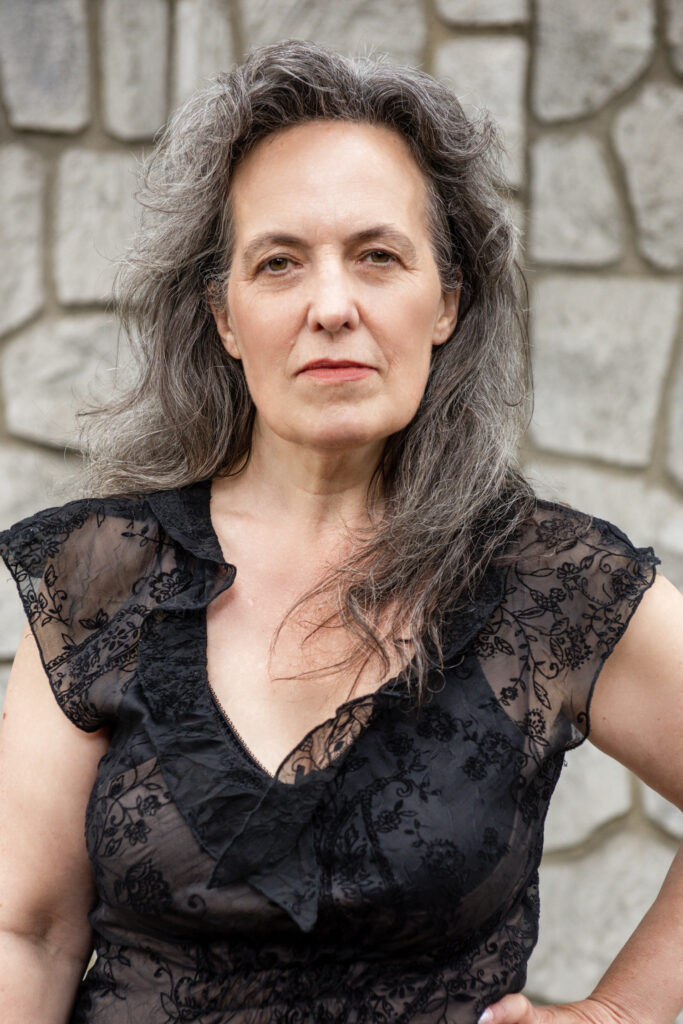
Exclusive Q&A by Brad Balfour, Arts Editor
Every year, I try to attend at least one day of The Lower East Side Festival of the Arts held at the Theater for The New City on First Avenue. No matter what time I get there, I always seem to witness various talented performers on the stage. This year was no different for I got to catch a performance by noted Celtic music maker, Susan McKeown. She was playing the bodhrán (a traditional Irish frame drum) dueting with her 23-year-old daughter Roisin singing a classic Irish tune. It was great to see her again. It was actually 25 years ago when I last interviewed her while being the founding editor-in-chief chief of the slick print publication, Irish Connections.
Now I had a reason to interview her again because late last month she debuted a feature documentary, “The Land and Its People.” It tracks the remarkable history of a few blocks off Avenue D.
The film is a celebration of the legacy of New York’s first social worker, Jacob Riis … the housing development that bears his name, community solidarity … and the 60th anniversary of the day that Lady Bird Johnson declared Jacob Riis Houses to be “the greatest public housing development in America.”
As Mckeown said in an email, “We’ve been busy developing new programming that we’re excited to launch with this screening. If you can’t make the screening, you can sign up as a monthly donor to watch the documentary at Cuala Foundation’s Patreon account and support our programs.”
Born February 6, 1967, this Irish-American folk singer, songwriter, and producer has been dubbed the “Celtic High Priestess.” McKeown has contributed to more than 70 albums over a career spanning over three decades. Among several awards and honors, she won the 2007 Grammy Award for Best Contemporary World Music Album for “Wonder Wheel” with The Klezmatics.
Since 1989, she served as the front woman of Susan McKeown & The Chanting House. Their 1996 album, “Bones” garnered international recognition, with Time magazine remarking, “This is the kind of music that will link Ireland’s musical past with its future.” Her 2004 album, “Sweet Liberty” — a blend of Celtic folk with elements of Mexican Mariachi and Malian Tuareg music — was nominated at the 2005 BBC Radio 2 Folk Awards. McKeown’s 2012 album, ”Belong,” was a critical and commercial success. Its lead single, “Everything We Had Was Good,” reached No. 1 on the U.S. Folk Singles Chart.
Throughout her career, McKeown has performed at numerous venues including the Glastonbury Festival, Carnegie Hall, the Brooklyn Academy of Music, the Hollywood Bowl, and the National Concert Hall. Her music has been featured on PBS, NPR, PRI, BBC, and RTÉ, as well as in ad campaigns for Audi, Jaguar, and Olay. Alongside poet Paul Muldoon, McKeown serves as co-artistic director of Feis Teamhra, an annual festival of poetry and music. It’s held at the Hill of Tara, an ancient ceremonial site in County Meath, Ireland.
Born in Dublin, Ireland and the youngest of five children, she grew up in a musical household. Her mother was a pianist and composer who fostered McKeown’s early interest in music. McKeown would later recall, “I was singing before I could speak because my mom had a Hammond organ at home and we were always surrounded by music.”
At 15, McKeown began studying classical voice with noted Irish soprano, Veronica Dunne. While still in secondary school, she chose to forgo a potential career in opera in favor of folk music. She then began busking on Grafton Street performing with friends, including future Academy Award-winner Glen Hansard. McKeown later matriculated to University College Dublin, earning a joint honours degree in English and Philosophy. During her studies she spent a summer in New York on a J-1 visa, becoming enamored with the East Village music scene. That eventually brought her to the States to experience downtown culture directly.
A dual citizen of the United States and Ireland, McKeown lives between NYC and Dublin with her daughter, Róisín. In 2010, McKeown devised and produced “Songs from the East Village.” This world music album featured the students, parents, and staff of P.S. 19, an East Village Community School in Manhattan where her daughter was a student. The album was featured on NPR and has raised more than $30,000 for the school’s Language & Arts programs.
In 2018, McKeown served as Music Network Ireland’s musician-in-residence at the Dún Laoghaire LexIcon Library. There she researched the lives of notable but historically overlooked Irish women from the county. She then composed and performed songs inspired by their stories.
In addition to her entertainment work, McKeown is the founder and director of the Cuala Foundation, an international non-profit dedicated to building “social, economic, and cultural power for marginalized people.” In 2021, she was contacted by members of the Afghan Girls Robotics Team. After the young women fled Afghanistan for Pakistan, McKeown worked with the Irish Department of Foreign Affairs to help secure special refugee status for them. Over the following two years, the Cuala Foundation raised funds from donors and directly supported the team’s resettlement in Ireland, as well as that of 55 of their family members in California. But that was just one of its achievements, the latest being the release of this film.
Q: What are your thoughts about what led to the film’s creation?
Susan McKeown: The documentary came about because the NYC Housing Authority (NYCHA) tried to privatize Jacob Riis Houses last year. Public housing is NY’s only real affordable housing. So we collaborated with the community to resist the well-resourced efforts to invite private developers into a space that should be protected. The residents voted against it 2:1 so it’s protected, for now. My friend Al Diaz, the legendary street artist, told me about the day in 1966 when Lady Bird Johnson visited and declared Jacob Riis “the greatest public housing development in America” so I first produced a small film from AP wire and NYPD surveillance footage of that day. Then with my Cuala Lower East Side co-director Eddie Rodriguez, we decided to take a community approach in telling the incredible story of this small piece of land and its native, Dutch, African, English, Irish, German, Jewish, and Puerto Rican people over the past 400 years. There’s so much that we called this Part 1 and Eddie’s working on Part 2.
The documentary features native housing traditions that took care of people. It flows through Dutch and British occupation to catalog the waves of immigrants with particular focus in this Part 1 on the Irish and Puerto Ricans. Included is information about Jimmy Cagney who was born at 8th Street and Avenue D. Also Lady Bird Johnson’s program to beautify Jacob Riis Houses, declaring it “the greatest public housing development in America.” She invited Brooke Astor to invest $one million in the development, only for the program and its benefits to be dismantled within a decade when the defunding of public housing began in earnest.
Q: How different is playing in New York compared to Ireland?
Susan McKeown: I find them to be very different experiences, the audiences are very different and it’s always more intense for me in my hometown of Dublin. Moya Brennan used to talk about her experience of the music coming from the land in Donegal. I kind of have my own experience of that in Dublin and on the Lower East Side. I don’t know how to describe it but it feels like a different song of belonging in each place that I try to write myself into when I’m there.
Q: And talk about working with your daughter, Roisin.
Susan McKeown: I remember a teacher once telling me that Róisín was a joy to teach and I responded, “She’s a joy to parent”. While raising a child on my own brought the greatest challenges I’d ever known, it also brought the greatest gifts, and we always had our voices and our songs. The fact that I’m able to trace our musical gifts back through great-grandmothers who were making music in Dublin in the 1800s is a very liberating feeling. So to share and enjoy that onstage with my daughter today is indescribable.
Q: What about Róisín’s own career?
Susan McKeown: The devastating impact that companies like Spotify, Live Nation and others have had on music, music creation and performance has been an ongoing conversation between Róisín and me for years. She’s been headlining in Dublin and New York and her releases have garnered critical acclaim from music press in Ireland. Here on the Lower East Side for the past year, she’s also part of a regular scene –– performing at her friend Anna’s Torture Tuesday series held in Baker Falls. It’s a very supportive community of singer/songwriters.
Q: You’ve done your share of touring. Talk about your experiences touring.
Susan McKeown: It was brilliant to return to touring last year and travel and play in the wonderful company of stellar musicians, Kyle Sanna on guitar and fiddler Matt Mancuso. When you’re on the road you form a kind of family unit with the people you’re traveling with, learning new things, having new adventures and navigating unexpected stuff that always happens. Johnny Cunningham used to remind me how fortunate we are as musicians to perform for audiences and get thanked at the end of the day with applause and heartfelt messages. He would say that the money we earn is not for performing. It’s for getting up early for flights, traveling in all kinds of weather, dragging luggage and instruments etc. and doing the hard things along the journey so that we can show up for folks.
Q: You have other projects as well?
Susan McKeown: I’ve also been giving workshops in Irish Ancestral Healing which has brought me private clients for whom I conduct genealogical research — work that is endlessly rewarding. When I was 23, I went west to my grandfather’s birthplace to learn more about our family’s story. I’ve been fascinated by genealogy ever since. Some years ago, a friend gifted me a course in ancestral healing. During the experience, I recognized ancestral healing practices that had been passed by my mother and aunts. I found more in the ancient Irish songs I researched over the years.
Now I do genealogical research for private clients. Recently while doing research for a family in the U.S, I found an ancestor who was a Cork hedge school master in the 18th century. They are involved in education today and hadn’t been aware of Ireland’s rich hedge school tradition. So learning about this Irish tradition of learning — which grew out of resistance to British rule — was wonderful new knowledge about their family’s roots.
Q: Talk about the audience you are seeking through your various creative efforts.
Susan McKeown: In 2016, after I produced a huge Irish cultural festival that commemorated the Rising and Irish New York, I became obsessed with history and how stories are told. In 2017 I started working with film students to make small films with their communities. I was looking for ways to support people in telling their own stories and to amplify voices and stories that haven’t always been included in the story of a place. I just kept going with that and other projects and now we’re completing a couple of full-length documentaries that support specific projects we’re developing in Ireland. I love that today, even on social media, we’re learning more about hidden stories and voices that were suppressed. I hope that in a small way Cuala’s work is contributing to that.
Q: How do you balance your time between music and running a nonprofit?
Susan McKeown: Well, my life in music is very different today. I don’t think people realize how Spotify restructured the music economy and destroyed the capacity of millions of musicians to make a living wage from music. Musicians were simply the canaries in the coal mine for what was to come. Seeing the devastating impact that some technology companies have had on community culture, and particularly youth, is why I founded Cuala Foundation. The projects we produce are incredibly rewarding, such as this songwriting project we did with young women and girls of the Donegal Travellers Project. They didn’t know any songs written by Traveller women so they wrote their own.
Q: Say a little more about your albums. You’ve done so many, especially your collaborations with the likes of the Klezmatics and others.
Susan McKeown: The Klezmatics approached me when they started working on a Woody Guthrie project of lyrics Woody left that hadn’t been set to music. They were composing new music for the lyrics and I knew the band members — some of them lived on the Lower East Side and some played Irish music. Our first show was at the 92 Street Y with Arlo Guthrie and we went from there to Carnegie Hall a few months later. Then the recording happened. The touring took off and went on for a few years. It’s extraordinary when you think of it, but the band made it easy for me and my toddler to travel with them and it was a lot of fun! I just heard that album ‘Wonder Wheel’ might be re-released next year.
Q: Comment a bit more on working in other media like film, television and on stage. How are they alike and different?
Susan McKeown: As a teen I had a lot of creative interests. I did follow the advice of an astrologer who recommended that I focus on music. I’ve been fortunate to have success as a singer and songwriter, but over the past decade I really have had a lot of other creative opportunities that I’m immensely grateful for. Recording and film require patience and are very satisfying. And then there’s nothing like the live experience of collaborating with other artists for a live audience. I particularly love intimate shows where you can see and connect with the audience and I’m planning a few house concerts in Ireland in August with the guitarist Ger Kiely.
When I first came to the U.S. I could barely speak between songs and now I love to talk about the stories behind the songs. I’ve been working telling stories in many different ways for so many years that now I’m finally ready to write my own and so a couple of books are in the works.
Q: Over your long career what do you consider your benchmark achievements?
Susan McKeown: What I’m most proud of is raising my daughter as a singer songwriter and single mother. An art teacher in her preschool said to me “there’s always a way” and so I always looked for the way. It was fortunate that she loved being on the road and we had incredible experiences especially touring with The Klezmatics which were particularly fun times.
[It’s} very important to have had the friendships and experiences I’ve had — touring and recording with people like the late Scots fiddle master Johnny Cunningham. And making music or theatre of films with all kinds of creative people. I really value the fun in collaboration. Musically I’m still very proud of my first album “Bones” which is 30 years old this year.
For more info on McKeown go to her website: susanmckeown.com