
Review by Brad Balfour, Arts Editor
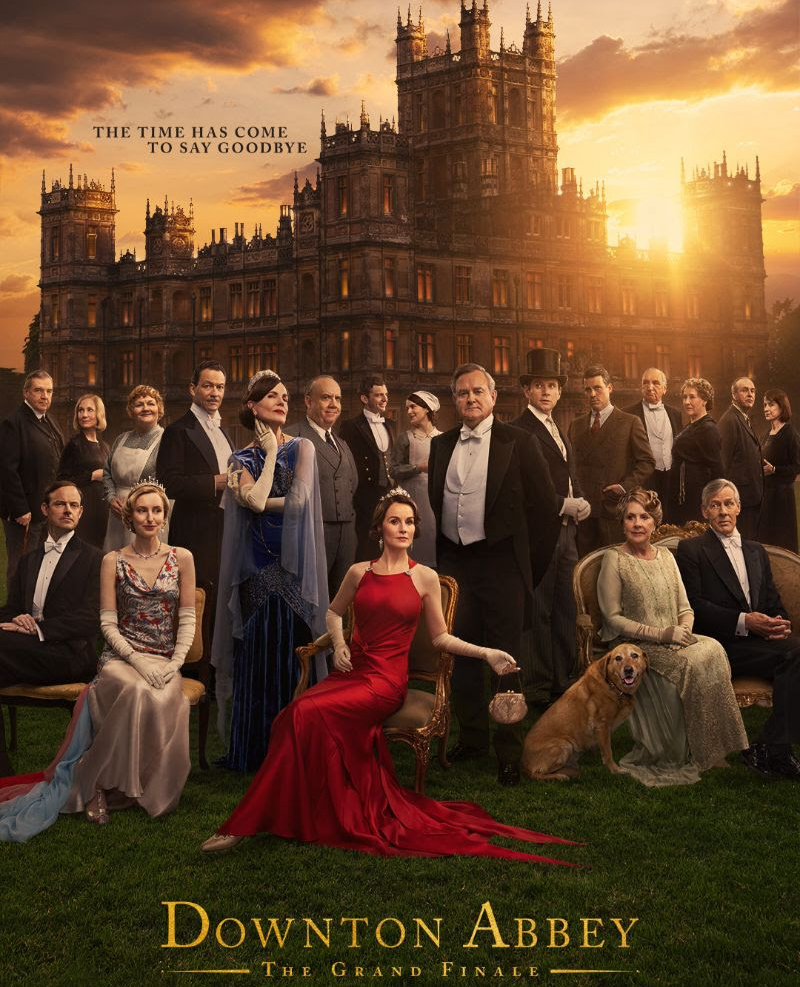
Film: “Downton Abbey: The Grand Finale”
Director: Simon Curtis
Screenwriter: Julian Fellowes
Cast: Simon Russell Beale, Hugh Bonneville, Laura Carmichael, Jim Carter, Raquel Cassidy,
Brendan Coyle, Michelle Dockery, Kevin Doyle, Michael Fox, Joanne Froggatt, Paul Giamatti, Harry
Hadden-Paton, Robert James-Collier, Allen Leech, Phyllis Logan, Elizabeth McGovern, Sophie McShera, Lesley Nicol, Alessandro Nivola, Dominic West, Penelope Wilton, Arty Froushan, Joely Richardson, Paul Copley, Douglas Reith
True to its title, “Downton Abbey: The Grand Finale” was created to offer a proper conclusion to the long-running franchise after its 14 years of development. With director Simon Curtis returning, the film presents a seamless continuity with the series’ past, including a showing of the late Maggie Smith’s unforgettable character, Violet Crawley — the Dowager Countess of Grantham — who frequently loomed over the narrative. The film fittingly ends with a dedication to the late actress who established a personality so impactful that she helped make the franchise a success.
As Paul Giamatti’s character said in this film, “Sometimes I feel that the past is a more comfortable place than the future.” For a fan like myself, part of the attraction to the series is knowing that the world is no longer like the Downton Abbey world of class and status. One can, happily so, that the world is not so defined by all these class distinction and the minutiae of behaviors and manners that accompanied it.
During the long-running franchise — it included six television seasons and three theatrical films — evolving societal change underpinned its expansive narrative. In this installment, set in 1930, we learn that nearly all the familiar characters return for this swan song (save, of course, the dead ones, who actually do show up in one form or another.) While it reprises familiar themes, its subtle humor and elegant dramatics have made it such a success — so much so in this film as well. It also creates a sense of foreboding in knowing what will be coming as the 1930s take place.
There is one new character, however, that gives “Downton Abbey: The Grand Finale” an additional comedic twist. He’s a real-life personality who lends the film a further heightened sense of reality. That person is the legendary dramatist/author and actor Noel Coward (well played by Arty Froushan.) He comes in to prod this encrusted and stultifying social system into loosening up with humorous barbs and witticisms that provoke reaction and free thought.
In 1930, several members of both the upper-crust and servant-class of Downton attend a performance of Coward’s “Bitter Sweet” — an operetta produced in London’s West End. (The latter are sitting up in the rafters.) Although everyone is having a fine time, it soon becomes clear that there’s trouble brewing, especially when Dowton’s owner Robert (Hugh Bonneville), wife Cora (Elizabeth McGovern) and daughter Mary (Michelle Dockery) attend a high-society ball. The scandalous news of Mary’s divorce becomes public, so she becomes an instant pariah and is ordered to leave by the officious hostess (Joely Richardson) — which Cora does, though not happily.
Not much later, Cora’s brother Harold (Giamatti) arrives from America. It seems that he has lost nearly all of his and Cora’s late mother’s fortune –– after having been given bad advice by his slick-talking financial adviser Gus Sambrook (Allesandro Nivola). That puts Downton Abbey in dire financial straits. Mary doesn’t learn about that until after she has had a one-night stand with Gus, whose American charm provides a temporary respite from her angst-ridden situation.
As is customary in the Downton universe, comical and dramatic subplots abound. They include the impending retirement of butler Carson (Jim Carter), who all too reluctantly hands over the reins to his respectful but eager replacement, Andy (Michael Fox.) Andy isn’t shy about doing things differently.
Another plot twist is tied into the upcoming County Fair, now led by Isobel (Penelope Wilton.) She shakes things up by inviting Carson and cook Daisy (Sophie McShera) onto the board. This intrusion of lower classes doesn’t sit well with certain County Fair officials, especially pompous snob Sir Hector Moreland (Simon Russell Beale) whose dialogue is one big “harrumph.”
Cora’s effort to restore her daughter’s reputation by throwing a grand party, provides another plot twist, since various neighbors refuse to attend. That is until Mary’s enterprising sister Edith (Laura Carmichael) invites Coward, in whose show their friend Guy Dexter (Dominic West) is appearing. News of Coward’s impending attendance, spread by the area’s servants, results in a triumphant event in which Coward not only sings a song but also, upon hearing of Mary’s divorce, dreams up the plot for “Private Lives” — one his great classic comedies about manners and social classes.
It’s a lot to take in, and there are times when one longs for the more languorous pace of the series. But Julian Fellowes’ always witty script proves a pleasure throughout. So the conclusion of the series brings to a close the on-going dramas infused in all the characters and their particular issues. The beautifully written and performed scenes make clear that the enduring friendships among these people of very different classes, demonstrates the enduring power of the franchise at its best.