
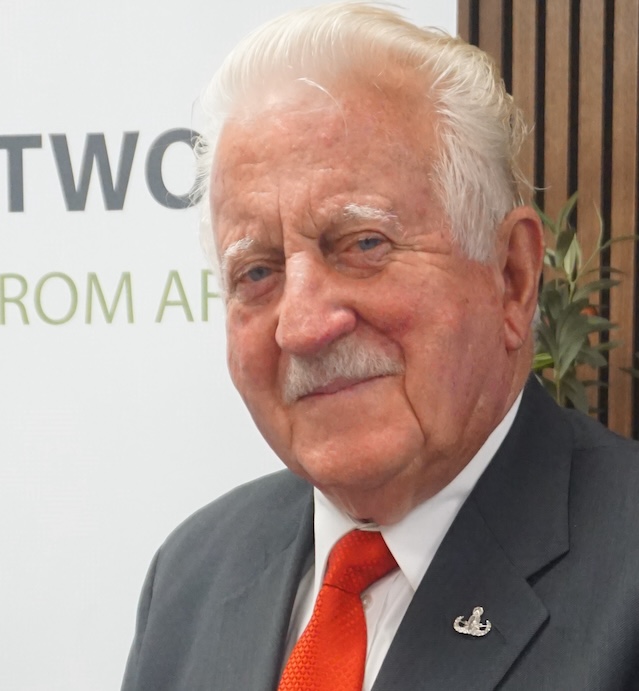
Exclusive Q&A by Brad Balfour
In a world full of turmoil over various factions, ethnic and religious communities, the story of Project Children is a ray of light and hope to counter all the negativity. Founded in 1975 by Denis and Pat Mulcahy, the charity has worked to bring Irish children to live with host families for a six-week summer respite from the everyday violence and strife of The Troubles.
That term “Troubles” was used to describe the ethno-nationalist conflict in Northern Ireland which lasted for about 30 years. As Britain tightened its hold on the six Irish counties of the Northern sector of the Irish Island, it exacerbated the strife between the Protestant and Catholic communities living there. Beginning in the late ‘60s, the conflict was widely deemed to have ended with the Good Friday Agreement of 1998. Although the Troubles mostly took place in Northern Ireland, violence spilled over into parts of the Republic of Ireland, England, and mainland Europe.
In contrast to the fighting and hate, Project Children was formed to counter the differences and bring the children from the North together under a low stress situation. It would go on to impact the lives of over 23,000 Catholic and Protestant children during the next 40 years. In bringing them together, the project showed that a non-violent, non-sectarian life is possible. Throughout its efforts, many relationships were developed illustrating the way that tolerance, understanding and communication can lead to life-long friendships.
In the process, a film was made and released in 2016 — “How to Defuse a Bomb: The Project Children Story.” Directed by Des Henderson, narrated by Liam Neeson — featuring a contribution from Bill Clinton — it tells the extraordinary story of how this cop (an NYPD bomb disposal expert) played a key role in helping defuse the decades old “Troubles” in Northern Ireland.
Through it all, audiences can follow the inspirational stories of Mulcahy and Project Children participants through one-on-one interviews and vintage footage. This 90-minute documentary surely proves that ordinary people can change the world.
Now Project Children is making a move to the Monaghan Peace Campus. To mark the 50th anniversary milestone for Project Children, and to ensure that its message of peace through the eyes of children is spread for generations, the charity has forged a cultural partnership with Monaghan County Council and the Peace Campus. This organization in Monaghan town is dedicated to cross community and cross border peace initiatives across the island of Ireland.
As the partnership forges protection, preservation and perpetuation of the charity’s 50-year legacy, it places its archives in a state-of-the-art building so visitors can see and hear about the efforts to extend the message. The Monaghan Peace Campus will showcase this iconic organization which had offered 23,000 children a summer reprieve in America.
Project Children now has Catherine Flood and Linda Croston of Croston Flood Recruiting, Consulting and Events helping to spearhead archival, community engagement and fundraising efforts in the US and Ireland. In the coming months, as they gear up for the #MoveToMonaghan, they are holding special screenings of the film here and in Ireland.
If the octogenarian Mulcahy had been known only for his work as a bomb disposal expert, he would have deserved to have his story told. But having made this very selfless effort to help resolve what seemed to be an interminable conflict, he amplified his effect on the world and played an important role in many lives throughout the years. So it only made sense to give Denis a call and talk about it for Irishexaminerusa.com’s audience.
The following interview took place a few days after a special 50th anniversary screening was held in partnership with Irish Network NYC, on Thursday, July 31in the Bank of Ireland Hub.
Q: What do you think of as the legacy of Project Children?
Denis Mulcahy: That we saved a lot of people’s lives. I know we made a huge contribution to the peace process because kids came out, met each other and had a better understanding of the whole thing. Of course, there part of the program is still going on with university kids. I’m sending 14 back tonight. They spent seven weeks here all summer. Some of you met them at the function the other night. They had the 50-year shorts on. Three walked up at the Ashland Center and one at the Emerald Isle Immigration Center. I had a couple in Denver, Colorado, working with habitats and a couple up in Utica. There is a museum up there. So [they were] working with that.
Q: How did the movie come about? What was the evolution of the film?
Denis Mulcahy: Different people had approached me about doing it, but it never really got done. It’s like writing the book. I’ve got somebody writing a book right now –– Jane Buckley, who has written several books on the Troubles. She’s a Derry girl and an excellent writer. She’s been writing a book on Project Children for the last couple of years. She’s going to finish it in October in Monaghan when we celebrate the 50th year anniversary there.
Q: You made the decision to move to the United States years ago. What made you make that decision and did you ever think about moving back? What do you feel about staying here and things that have evolved being in the States?
Denis Mulcahy: I came here in 1962, many, many years ago. There was very little in Ireland, especially where I grew up. Everybody basically had to immigrate and I left there when I was 17 years old. I came to New York and went in the Army National Guard for six years. Actually, I did my basic training in Fort Dix and was assigned to an artillery unit and the MOS. Don’t ask me what that stands for, but it’s a military terminology for whatever type of training that’s your MOS, which should have been artillery.
[Editor’s note: In the military, “MOS” is an acronym for Military Occupational Specialty, which refers to the specific job or career field of a service member.]
The number for it was 140. But the guy wrote 410 and I was trained in bomb disposal and it changed my whole life. I ended up 34 years with the New York City bomb squad after I did Fort Dix. Then I went to Fort Knox, Kentucky, and was in Fort Knox training. I’ll never forget it, November of ’63 when Kennedy got shot.
Q: Really?
Denis Mulcahy: The strange thing about that — it was almost 50 years to the day that I got the John F. Kennedy [Memorial] medal from the AOH [The Ancient Order of Hibernians]. They had their convention in Kentucky, right by the base. It was the strangest thing because when I spoke about it, I said, “Little did I know 50 years ago that I was assigned here when Kennedy got shot, and that I’d be back receiving the Kennedy medal from the AOH. My grandson actually is in the military now. He’s a 2nd lieutenant and was serving in Fort Knox when Trump got shot.”
It’s crazy, you know how coincidences are and whatever. He’s in Post, Oklahoma, now, and will be going out to Texas in a few months. He did the ROTC through Boston College but he wasn’t ready. His father is a partner with Deloitte & Touche and his sister is with KPMG. But he wasn’t ready for the corporate world, so he went there. He has a four-year commitment now in the military.
Q: Do you have other relatives and/or children and grandchildren thinking about being police people?
Denis Mulcahy: My kids. My daughter’s a retired lieutenant. Sean is in the bomb squad for 14 years and he’s got close to 30 years on the job; he’s not going anywhere. Actually, Sean had that job at 345 Park Avenue the other night because when somebody shoots people, commits suicide and stuff, you have to be very careful about that.
They might be a suicide bomber, also. They bring the bomb squad in to check the body, make sure there is no set booby trap or whatever. Then he opened the car and went through it. He happened to be working with that job. Of course, you were in that building a million times, the Irish Consulate was up there.
Q: I know that building. They’ve moved since.
Denis Mulcahy: My granddaughter is with KPMG in there. But she was out of there when it happened because it was late. Anyhow, that’s New York, a great city. I came here when I was 17 and never left. I was working a couple of jobs and did 34 years in the NYPD and raised four kids. Two of them followed my footsteps, Maureen and Sean. The oldest guy is a partner with Deloitte. He did very well, a great student. He went to Pace and got his CPA and made partner.
He looked and played the part and worked hard. He got rewarded; he did very well. He lives in New Canaan and his youngest daughter now is in Georgetown, in Washington DC, and she expects to go with Morgan Stanley or somebody. She’s going to be doing a final internship with them. Kaitlyn did her internship with KPMG and they hired her. They’re good looking, smart girls. They looked the part and played the part.
The boy who was extremely smart, too, was not ready for an attaché case in Manhattan. He’s 6’6”, so he’s into basketball, working out, and he’s trying to go with the special forces now. As an officer, it’s difficult. They don’t need a lot of them. Enlisted men, they’re always looking for people. I never even gave that too much thought, but there’s a lot of people competing for that position with him. Of course, they’re all friends of his and they’re all working out. That stuff keeps him out of trouble.
Q: What were the big lessons you learned working in the bomb squad that were different from, say, the regular police?
Denis Mulcahy: There’s a few things. Working in the bomb squad, you were the end of the line. There was nobody you could call on; you were it. That was your mindset when you came there. People would say, “Well, you worried about this or that.” You come and if they said it was a car bomb or whatever, basically the place would be evacuated and then point down the street and say, “There’s a package or something suspicious down there.” And everybody would leave. The place was cleared out. So it was you and your partner. I would be well trained and you just had to deal with it.
You came up with a plan and hoped that as you went down and approached it, that it wasn’t your last walk. The man above was good to me, has been good to me. I’m 81 years old. My father died at 61 in Ireland, never went to a doctor, had a bad diet. He ate bacon, had breakfast, lunch and dinner and smoked cigarettes. He ended up getting a stroke though he was in excellent shape, skinny and everything. I guess his blood pressure probably was through the roof. Who knows? Never went to a doctor.
Q: I can imagine your blood pressure must be lower because, if you’re going to be in the bomb squad, you have to be pretty cool. You didn’t have high blood pressure. That’s for sure.
Denis Mulcahy: You were trained pretty good for it. Like I said, it was your job. And afterward, you think about it, because we all do stupid stuff. We had a couple of bomb squad guys get killed a couple of weeks ago out in California.
Q: It seems, they didn’t store a grenade that was found properly. In any case, it sounds like you guys had it down. Have you ever watched these movies that have bombers in them. Many TV series have bombs with different levels of fail safes. It’s so difficult to figure out. Did you find that most of the people who planted bombs were not that clever and didn’t really have complicated mechanisms?
Denis Mulcahy: Today there are so many things already manufactured that can be incorporated into a bomb. Going back several years ago, the big thing we were concerned about was the pagers. Remember when we could just page you?
Q: Right, of course.
Denis Mulcahy: You could have ignited or set that bomb off. The crazy thing with that is you could get your pager and incorporate it into the device. You could go to Ireland and call your pager. As soon as the pager went off, the bomb went off. In the meantime, you’re out of the country. That was a big concern. Now there’s nothing to do with stuff like that. It’s not made anymore, but most of your bomb people, they copied off each other.
Then with the internet, because people would say to us, “In New York, who do you deal with?” We had organized crime … and we had drug people. There was always a feud going on between them. You had the animal rights people. You had the abortion people. I had Dennis Malvasi, who’s still around. He planted bombs and blew up five or six abortion clinics in New York, in Manhattan.
Q: Oh really?
Denis Mulcahy: I got a job one morning on Queens Boulevard. There was a suspicious package under the cushion of a couch in the doctor’s office. Went there because we had all the abortion clinics marked in Manhattan and we knew where they were or whatever. I walked in there, having no clue that this doctor was doing abortions in the office. There were three sticks of dynamite with a travel alarm clock. The face of the clock was taped with black masking tape, so you couldn’t tell how much time was on it or whatever.
Anyhow, you never know, when you work the bomb squad. You are only as good as your next phone call. You can sit around for days, but as soon as you have something to do, yourself, or something personal … as soon as you go to do it, you get a call and they want to know your arrival time, how long is it going to take you to get here? I feel like saying when we get there, we get there. Many times with young guys, driving 90 miles an hour out to the scene, I’d always tell them, “Hey pal, slow down.” It’s bad enough we might get killed when we get there. Don’t kill me on the way there.
Q: Yeah. [Chuckles]
Denis Mulcahy: Now we had guys get hurt, badly hurt from accidents, car accidents, collisions. We lost a guy, Connolly, in a car accident. He ended up hitting a pillar or something, going back many years ago
Q: You said because of speeding?
Q: Denis Mulcahy: Yes, of course. Just because you have lights and sirens doesn’t mean that somebody hears you or are coming the other way. What is very common is both emergency vehicles colliding, whether it’s a fire truck and a police car or whatever. They both have lights and sirens and sometimes you can’t hear them. You have to get there safely but, when you get older, you’re more conscious of stuff like that.
The young guys think nothing’s going to happen. That it was an experience, to be quite honest. It’s a great place because I did a lot of this stuff with the kids when I was working there because when they called you, they wanted you and they wanted you right away, But when you didn’t have jobs and stuff, you had quite a bit of downtime and nobody bothered you, nobody looked for you. However, as soon as they needed you, they wanted you there right away.
Q: You founded Project Children in 1975. When you look back now, did you think it was going to explode in the way that it did?
Denis Mulcahy: If I did, I wouldn’t have done it. 50 years of my life I put into that. It’s crazy. It really is. The time, the commitment –– not just me, but my family too. Back in the day when we had no computers or whatever, the big thing was an answering machine. The house phone never stopped. And the kids’ job was when they came from school to go in and clear the machine. Like the police department, we had a telephone message book and anything that was kind of important, they had to write it in this book.
Then when I got around, I would make the call back. I’d answer the call or whatever and I would write whatever. There was no answer. I left a message because there were so many calls, you would forget. We did over 900 kids a year. Most of that time there were no computers or anything. Everybody had a number –– the host family, the kids, the baggage, everything was a number. So wait a second, what number was that? You just couldn’t keep track of it otherwise.
Q: You had 900 kids and then how many host families each year, once it hit its stride?
Denis Mulcahy: You would have some families that would take two, but not a lot. It was strange how that program [was attractive] to host families. The first time they would come into the program, everybody wanted a girl because they probably thought they’d be less trouble. However, you say that you brought 900 kids this year. A lot of people had put in for girls. You eventually ran out of girls. So it was either you take a boy or we don’t have anybody. The next year, more boys would be repeated than girls.
In the meantime, there were more girls requested at the beginning, but boys were easier to deal with. You give ’em a baseball glove or a fishing rod or whatever. I guess girls needed a little more attention. As a result, more boys would be requested back. Of course, we did not pay the airfare on a repeat. The host family would have to do that. It wouldn’t be fair because we raised this money from the public, and it was to bring kids one time. The first time because after we did the first six kids, everybody was looking to bring the same six back.
The program would never have outgrown the way it did. We had a lot of rules. Kids that would be brought back a second time, there would be a bigger percentage of Catholic kids than Protestant kids. The reason we thought that was, I think, that Catholic kids came from worse neighborhoods and more deprived families. That’s the only way. I figured it out. That’s the way it seemed. Where a Catholic kid came from a big family, they had very little. The father was in the prison, Long Kesh, and the mother was raising him. That was the typical Catholic family and people felt there was a great need to bring ’em back or whatever.
Q: Did you get a lot of non-Catholic host families, or was it mostly Catholic?
Denis Mulcahy: No, we did. The very first ones there, the Hoffmans. Duke was Catholic and Carol was Protestant. You’d get quite a few families like that. The amazing thing too with the kids was that where there’d be kids and the Irish kids now in the same neighborhood, as soon as they heard the guy speak and he had that Belfast accent, they met a buddy right away. They’d become buddies right off the bat. In the meantime, one might be Protestant and the other Catholic, and they never even thought about that because all they did was the action.
They were at home with each other or whatever, and all of a sudden they found a buddy. Then several weeks later they realized that they were killing each other back home. It was kind of sad because, again, they were the same color. There were so many things the same. Even the Troubles that they were involved in. You could hear a Protestant kid talking and you’d think his father was an IRA man. Brad: But in the meantime, he was a UVF or whatever.
But it was the only way you had to get him out of there to really make a difference. They tried a program where they brought a whole group of them down to the South, into a little village, somewhere down. I’m not sure exactly what county.
Q: South –– you mean South Ireland or South America?
Denis Mulcahy: South Ireland. they didn’t put them into host families. Of course, these kids ran crazy through the neighborhoods. People couldn’t wait the hell to get ’em out of there. The whole vehicle was putting individual kids in with an American family. If that kid even had a very bad background, he/she would be forced to live like that family did.
We did have kids with very, very bad backgrounds. People, teachers or clergy would be checking up to see how they did, and they did fine. Give them a little bit of love and care and whatever. Bhange them and whatever. Your kids, they have to do the same thing. That’s why I always tell people, don’t be smiling. Don’t ask what they would like to do? You tell ’em this is what we are going to do, because they wouldn’t know what to do.
Q: How many marriages did you get from the kids that came here?
Denis Mulcahy: It’s funny that you should say that. I have a picture and he just posted it. He’s married, now 20 years. But 20 or 40 years ago, I sent him into a home upstate, just south of Syracuse. He was like 11 years old, and the daughter of the host family was in the house. He piped up one night and he’s looking at the little girl. He says, “I’m going to come back and marry you someday.” Isn’t it amazing, a kid at that age. It’s amazing the father didn’t throw him out.
He came back and married that girl. They’re together 20 years already and have three kids. He’s always sending me messages about how I changed his life, all this kind of thing. But wasn’t that an amazing story?
Q: Did they become a host family?
Q: Denis Mulcahy: No, they had kids of their own. I met somebody last week and his wife was on the plane with him 40 years ago. But they had no (idea.) It was years after, when a conversation came up. They were in this program or whatever. And when they compared years and areas and whatever, they were on the same plane.
Q: You’ve met a lot of people now. What are you doing nowadays? You said you still have a job you’re doing?
Denis Mulcahy: I work with a bomb detection company. What they do is … one of our big clients is FedEx all over the world. You see FedEx will fly a plane from Newark to Heathrow, or whatever. The packages really aren’t checked that much. But as soon as they’re transferred onto passenger planes, they have to be screened and checked. So the screeners might have a problem with something and they can send it to us, my old company.
I’m with Allied now, the biggest security company in the world. Today now I worked with a guy from Belfast who called me –– Andy Williams –– to take a look at something. We talked back and forth and were looking at the same x-ray. These are mostly packages that came through the mail or were sent somewhere, whatever.
That’s what I do for this company. We were bought by Allied about six months ago. What Allied wanted … I’ve been with this company for about 30 years. We started with six people, one bomb dog, one X-ray machine. And we got a contract from Allen & Company there on Fifth Avenue. They’re an investment bank. Don Keough –– he was a great man. You probably met him at some point because he was a big supporter of Paddy’s. Don passed away. He was with Notre Dame. Anyhow, he hired us to go out. He would invite 300 of the richest people in the world to Sun Valley, Idaho.
Q: Oh yeah, I know about that.
Denis Mulcahy: I did that for 25 years with that company. Anyhow, here’s what I’m getting to. We started with one dog. Allied bought the company about six months ago. Actually, they’re doing a big story on me, the company, but that’s another story. The only reason they bought us, we now have 800 bomb dogs throughout the world. Is that mind boggling or what?
Q: It is.
Denis Mulcahy: most of our dog handlers were bomb squad guys from different police departments. If we got a job in Japan, we’d reach out to the Japanese bomb squad. And if they had guys retiring, you offer them jobs, good paying jobs or whatever. Now most of our handlers are young military guys that work with dogs and the military are … even if they didn’t, we would train ’em. That’s our whole. There’s no way we could have handled 800 bomb dogs with retired cops even throughout the country, That would be difficult because of the changeover. They’re getting old too fast. Young military guys, they’ll be with the company for 20, 30 years.
Allied is a huge company, a sophisticated company. They do all branches of investigations, everything in a big way. But the only thing they wanted out of our company was the bombing. They had no bomb units within their security company. So they were big on the dogs. We actually had a bomb dog at 345 Park. That was one of the locations –– Rudin Management. A lot of their buildings, we do the security there for them. It’s a big company. Big money, big money.
Q: You could have had a whole movie about you just for the bomb squad. Forget about Project Children.
Denis Mulcahy: That was what everybody wanted to do. I wanted no part of it because they’d say we wanted to do a story about Project Children. Of course, I did come by the bomb squad or something. Then they’d forget about Project Children. It was all about a bomb squad and I didn’t want that. When they came back to me and said that the name of the movie was going to be “How to Diffuse a Bomb,” I lost it or whatever. But they calmed me down and said, “It means how to diffuse the troubles. It has nothing to do with bombs.” The last thing I wanted was having the bomb connection, but it was catchy. As a result, a lot of people look to see what it was about, and so on and so forth.
Q: Did you do any advising with television or movies?
Q: Denis Mulcahy: My son Sean, who is currently in the bomb squad, has been doing it for about 20 years. He’s been in “Blue Bloods” and every cop movie. He was in “Inside Man” with Denzel Washington. You see, it’s the same crew that does the behind the scenes and the advising. He’s a diver and a sharpshooter. He does a lot of diving, too, because they would have some celebrity doing something by the water … and they’d want to have a diver on the water. Of course, they’ll always reach out to him if they need behind the scenes participation, need 10 uniformed cops or whatever. Because he was in the ESU if they needed a door taken down, or any those kinds of things. They have used their uniforms. They actually are work uniforms. They also use more of their stuff. The movie company doesn’t have to be trying to get that.
He’s at that all the time and doing crazy stuff. And in the meantime, he bodyguarded Angelina Jolie and Brad Pitt and people like that. Because when they’d be on a movie set, their security company might be from California or somewhere, and they’d be looking for people here. So they wouldn’t have to come in here all the time.They’d put Angelina on a private plane to Jersey –– the one right across the river there by the Meadowlands, Teterboro. She’d come in there and Sean would meet her with a couple of guys. They would take her into Manhattan because she did something with the UN. She used to come in a lot and he (Brad) did a lot. Then, of course, they got divorced, but Sean stayed working with both of them. They don’t do it a lot, but he does it once in a while.
Q: Does he get you into the movie? Does he get you into the premieres?
Denis Mulcahy: We don’t. We’re not part of that because you know, there’s something with that. There’s an awful lot of sitting around and waiting to do stuff. You have to be patient because they don’t want to listen to you bitching. They’re paying you and they’re trying to get to you. In the meantime, you might sit around for six hours to do a 15 second shoot. There’s a couple where you do that umpteen times. They keep repeating it. It was funny.
This was a movie, something with the Bronx. Anyhow, this actor was a sergeant in the PD, and they were like inside. So he’d be coming up the stoop and they’d be coming out. They did umpteen takes of it, and they were getting tired. And the one take –– they do it one more time –– and his partner with him hit the actor with his shoulder and put him flying off the stoop by accident. That was the piece they saved. That was it. Perfect. The way it happened, in the meantime, they almost killed the poor guy.
Q: You’ve missed your opportunity to be in the movies, to go watch the set or to go to the premiere. But you’ve met a lot of people along the way. I just can’t believe the list here. I mean, how many Taoiseachs have you met? How many presidents have you met? How many different awards?
Q: Denis Mulcahy: Reagan was good. Reagan brought a personal check to me for $500 going way, way back, and sent one every year for about four or five years. It was amazing because of the way that came about with Clinton, Carter, Bush. I went to Texas with a chapter and Bush was the governor. He gave me a Texas hat and the head of police –– special police down there for the states –– they had a badge. I can’t even think of it now. He gave it to me and I did Montana. I took Dermot Gallagher, who was a great man, an Irish ambassador. I took him to Butte, Montana, and it was a great trip.
I am going to plant a tree here in two weeks in Greenwood Lake on the beach. It’s going to be in honor of the people who talked to kids 50 years ago. I’m going to add additional trees in the coming year and we’re going to open this Centennial Fort in Greenwood Lake. Project Children is going to be a big part of it. I’m meeting the mayor and we are doing a ceremonial thing.
I’m going to do this in Ireland, also in my hometown and my wife’s Cork, whatever. I wanted to do it in Greenwood Lake first, because that’s when the first kids came. It’s more of a ceremonial thing. We have the tree and we fill the dirt in around it. More than likely, it’s going to be moved because there’s a lot of work to be done in this park yet.
Q: There’s so many people you’ve met — Popes and many politicians. Who were the ones besides the presidents, who really made an impression on you?
Denis Mulcahy: I have the Benemerenti medal from Pope John Paul II, who is a saint today. It doesn’t get any better than that. I have the John F. Kennedy medal and the Guardian Society Medal, which is the black Society from the Police Department. When I got one of the medals, I was hoping for the Emerald Society one when I got the Guardian Society. Not that it made any difference, but it was still very special. I have that and got the OBE from the Queen. That came with a medal and now she’s gone. A lot of the signatures on the certificates, a lot of that is going to be on display in Monaghan.
Q: Talk about Monaghan and what’s going to happen there. That’s where all your medals and collections of signatures and photographs are going to end up.
Denis Mulcahy: to be quite honest with you, I’m a little bit concerned that they’re over the top with the police stuff. When I worked 9/11, I had somebody cut a cross out of one of the big steel beams with an acetylene torch. It’s very crude, heavy, whatever, not big; but it’s off one of the beams from the tower — One World Trade Center. That’s going to be on display over there with a flag and the names of people who got killed, plus a replica of the towers and my uniforms. We’re going to have a bomb suit on display.
I am more leaning towards honoring the people that I had [known for] 50 years that are no longer with us. They played a huge part in the program. I’m a bit concerned that some of that’s going to get lost in the shuffle. We have a lot of people there and a lot of older people that we can recognize and we’ll see what happens.
I got Margo [Margaret Catherine O’Donnell] who was a great Irish singer and 50 years ago we used one of her songs: “If I Could See The World (Through the Eyes of a Child)”. Margo is coming and she’s so excited because she had no idea that her song made such a difference and raised all kinds of money for the program that we started. That’s going to begin at the beginning. We’re going to talk about our first fundraiser. It was like a telethon, the small little radio stations here in Warwick. Ed Klein owns it, WTBQ actually bought later years by Cousin Brucie, Bruce Morrow.
Q: Oh yeah.
Denis Mulcahy: Who I met. He’s still around, but the station was too small and he got rid of it. So that’s going to be a great way of setting the tone. And I have a video of George Mitchell talking about the Good Friday agreement. John Hume, Martin McGuinness, Bill Clinton. Clinton did a piece for me for the 25th anniversary. That’ll be like halfway through the program. We’ll show that and we will have kids, speakers that did very well. I have a Protestant kid, he has a show on BBC called TalkBack, William Crawley, and an excellent speaker. He’s going to come and speak as well.
Upcoming Screenings:
Monday, September 15 • 6:30 – 9pm
Project Children Documentary Screening in Rockchapel, Co. Cork
Bruach na Carraige
Rockchapel, Co. Cork
Tuesday, September 16 • 6:00 – 9pm
Project Children “How to Defuse a Bomb” Presented by Leitrim County Council
Island Theatre
Ballinamore, Co. Leitrim
Wednesday, September 17 • 7:00 – 9pm
How to Defuse a Bomb Documentary – Carrickmacross, Co Monaghan
Carrickmacross Workhouse
Carrickmacross, Co. Monaghan
Thursday, September 18 • 6:30 – 9pm
Project Children Documentary Screening in Carrickroe, Co. Monaghan
Carrickroe Community Center
Carrickroe, Co. Monaghan
Friday, September 19 • 6:30 – 9pm
Project Children Documentary Screening
Conor Lecture Theatre, Birley Building, Ulster University
York Street Belfast BT15 1ED