
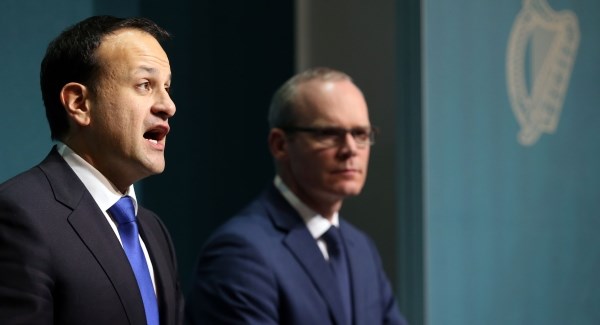
 The Government has dismissed reports of a breakthrough in the Brexit negotiations as “speculation”.
A spokesperson for the Government said “no agreement” has been reached on the withdrawal of the UK from the EU and that “nothing had been confirmed”.
He said officials in Dublin had not been formally notified of a deal being reached in Brussels.
“We’re at a stage where there is still no agreement at this point in time,” the spokesman said on Tuesday evening.
There is actually no agreement. At the moment this is only speculation
The comments were made following reports this afternoon of a breakthrough in the talks between EU and UK negotiators.
The deal will be the focus of a crunch Cabinet meeting at Downing Street on Wednesday afternoon.
British Cabinet ministers were invited to read the papers relating to the draft deal on Tuesday night ahead of the special meeting of Theresa May’s senior team “to decide on next steps”.
The Government spokesperson described the situation as “fast-moving”.
He confirmed the Irish position on the backstop had not changed, adding that “a number of issues were outstanding”.
In another sign that Dublin may not be happy, a spokesman for Tánaiste Simon Coveney said: “Negotiations between the EU and UK on a withdrawal agreement are ongoing and have not concluded.”
He also said a “number of issues are outstanding”, adding that negotiations were at an “extremely sensitive” juncture.
Members of Ireland’s opposition gave a cautious welcome to the reported deal.
Labour Party leader Brendan Howlin said any agreement needed to ensure there was “a permanent backstop to protect a borderless Ireland”.
Fianna Fail’s Brexit spokeswoman Lisa Chambers said the detail was important.
“We need to see the text, we need to see exactly what has been agreed, what are the implications for the border issue, for trade,” she said.
Ms Chambers added that a deal that included the UK staying within the customs union would be the best outcome for Ireland because east-west trade was “so important”.
Independent TD Thomas Pringle said he needed to see the details before commenting because it could have “potentially very negative effects for the border if it’s wrong”.
Sinn Féin’s David Cullinane said: “We’ve always said that the backstop and the insurance policy which has to be put in place for Ireland has to be long term, has to be durable, has to be permanent.
“It has to give protection to the people of Ireland that we need, which is to avoid a hardening of the border to protect the Good Friday Agreement in all its parts and to protect the rights of citizens.”
Earlier in the Dáil, Taoiseach Leo Varadkar would not comment on reports that a text had been agreed taking into account the Irish border question.
Minutes after reports of a deal emerged, Mr Varadkar would not answer questions from Fianna Fáil, Sinn Féin or the Labour Party on the matter.
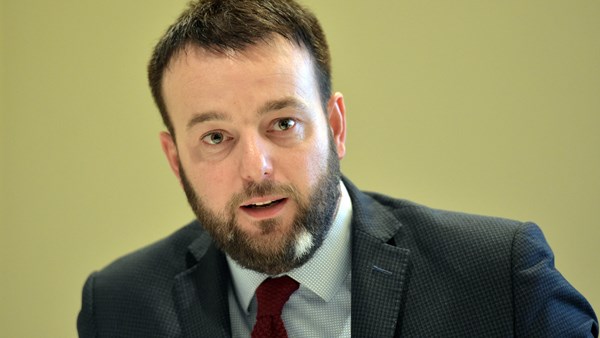 Meanwhile, political leaders in Northern Ireland have given a cautious welcome to a deal being agreed in the Brexit negotiations.
SDLP leader Colum Eastwood welcomed reports that the UK and EU had agreed a text on the border in Ireland, but he said any agreement must include a backstop.
Mr Eastwood said: “The SDLP are glad to hear that an agreement might have been reached and we look forward to reading the text of that agreement in detail.
“If the agreement involves a backstop that protects Ireland from a hard border then we would hope it will gain support in Westminster.”
Ulster Unionist leader Robin Swann said there must not be any “ambiguity” about Northern Ireland’s place in a post-Brexit UK.
Mr Swann said the next 24 to 48 hours in the negotiations would set “the direction of travel for Northern Ireland and the rest of the United Kingdom for decades to come”.
“The bottom line for the Prime Minister, the Conservative Government and their partners in the DUP must be the achievement of a sensible deal which respects the result of the referendum and maintains the integrity of the United Kingdom,” he said.
“There must be no ambiguity, constructive or otherwise, in any deal about Northern Ireland’s place within the Union in a post-Brexit UK.
“To do otherwise would be a serious blow against the Belfast Agreement and the principle of consent and will set a dangerous precedent for the future.”
DUP deputy leader Nigel Dodds said that the deal as reported would leave Northern Ireland “subject to the rules and laws set in Brussels with no democratic input or any say”.
He added: “We object to that on constitutional grounds that our laws would be made in Brussels, not in Westminster or Belfast.
“That is the fundamental red line.”
Mr Dodds added that any regulatory checks between the UK and Northern Ireland “would certainly be a breach of the PM’s pledges to the people of Northern Ireland (and) the pledges that she made to the people of the United Kingdom”.
Alliance Deputy Leader Stephen Farry described reports of an agreement as “encouraging” but he expressed “caution” on a number of grounds ahead of any publication of an agreed text.
“An open-ended backstop in place until or unless it is superseded is critical to protect the Good Friday Agreement and to avoid a hard border in Ireland,” Mr Farry said.
He added that it was important people were “measured” in their reaction to the backstop and do not contribute further to “unnecessary dramatizing of something that should be seen in pragmatic terms”.
“Ultimately, the backstop is only an insurance approach to Brexit,” he said.
“There is no such thing as a good or sensible Brexit.”