
 The Government has set aside €110m in Budget 2019 to combat “the political challenge of a generation” posed by Brexit.
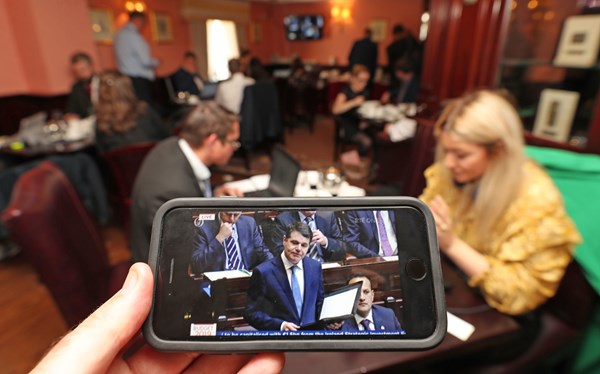
Finance minister Paschal Donohoe announced tax and spending measures including more funding for housing and health in next year’s budget in the Dáil today.
The minister acknowledged that the prospect of a no-deal Brexit had played a significant part in the planning of government expenditure for next year.
Brexit is the political, economic and diplomatic challenge of our generation
“Brexit, the outcome of which is still unclear, edges closer each day,” Mr Donohoe said.
“Increasing trade barriers are raising the specter of protectionism and the international tax landscape is changing rapidly.
“Brexit is the political, economic and diplomatic challenge of our generation.”
Mr Donohoe added that the Government had been thoroughly planning its strategy for the UK’s exit from the EU, including protecting “hard-won peace” in the North.
“The most important next step is to conclude the negotiations on the Withdrawal Agreement, including the backstop to ensure no hard border in Ireland, and the political declaration on the future relationship between the EU and the UK,” he said.
An initiative worth €300m, and a Future Growth Loan Scheme for SMEs and the agriculture and food sector were announced.
A provision of more than €110m for Brexit measures will be divided across a number of government departments and will see an increase in funding for the Peace program, which funds community groups on both sides of the Border.
The British Irish Chamber of Commerce has welcomed today’s Budget which, they say, “will help businesses in their preparations for Brexit”.
John McGrane, Director General of the British Irish Chamber of Commerce, said: “The establishment of the Rainy Day Fund with an investment of €1.5 billion is a prudent move that will ensure our economy is best prepared to deal with any shocks that may arise over the coming months and years.”
However, the Chamber said additional measures could make Ireland more competitive.
Mr McGrane said: “Even further adjustment to Ireland’s marginal rate of income tax, capital gains tax and the higher rate of VAT will improve the country’s competitiveness.
“The increase of the VAT rate for the tourism sector to 13.5% is unwelcome and will have a real impact on a truly national sector that brings economic benefit to communities across the State and especially in rural Ireland.”
He concluded by saying that today’s Budget is a positive step in Brexit preparations for the country, “but we must ensure that no businesses are left behind as they prepare for a new economic and trading environment beyond March of next year.”
This is the third and final budget under the confidence-and-supply agreement between Fine Gael and Fianna Fáil.
Other announcements included an increase in social welfare payments of €5 and a reduction in the 4.75% rate of the Universal Social Charge, introduced to deal with the fallout from the financial crisis a decade ago.
The point at which people hit the higher rate of income tax will also rise by €750 euro to €35,500.
The 9% VAT rate for the hospitality sector will be abolished, the rate will increase to 13.5% for all areas of the sector, apart from newspapers and sports facilities.
Betting tax will increase from 1% to 2%.
Excise on cigarettes will increase by 50c but there will be no increases in excise on alcohol.
The announcements have already been labelled a giveaway election budget in the media.
The Budget comes as Ireland rebuilds its economy after the crash of the Celtic Tiger economy and recession post-2008.