
By Barry Coughlan
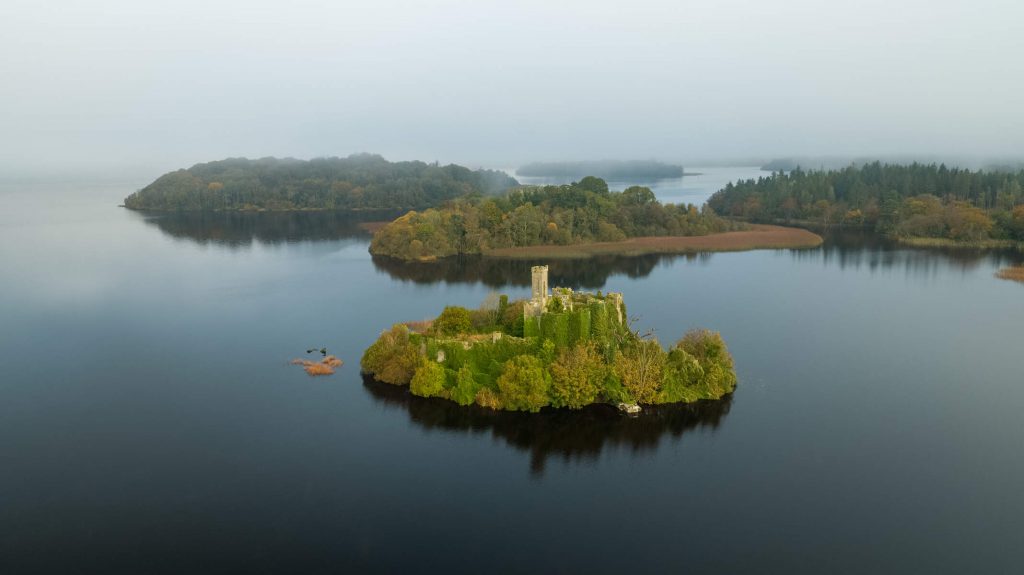
My abiding memory of a trip to Roscommon many years ago, the only time I actually stayed overnight in the County, was of a brief visit to Lough Key and of the stunning beauty that surrounded it to enhance the natural beauty of a lake beautifully colored by an ever-changing sky that day.
They say in Ireland it’s not unusual to experience all of the seasons in one day and that was the case on the day of my visit, but while my short ramble left me feeling cold and wet, as well as warmed by a summer sun, it was also an exhilarating experience the like of which has never quite been repeated.
While I was young and normally impressed more by human things of beauty, the memory of that wonderful vista and the feeling of calm that short time brought to me has never left.
I’ve passed through the country since from time to time and never ceased to wonder at the natural rugged beauty that this country throws in front of visitors. Maybe it’s an age thing where appreciation comes more with time.
Roscommon is a county of castles and ancient kings, of stately homes and spectacular landscapes. It’s a county rich in memories from bygone times and a county that warmly invites you to create new memories as you discover this hidden heartland. That’s part of the PR blurb for the region and it’s not too far from the truth, believe me.
The County of Roscommon has produced some famous names from Ireland’s past and present, including two people who graced the office of President.
The first President of Ireland, Douglas Hyde is from there (Hyde Park, the GAA park in Roscommon is named for him), past President Mary McAleese and former Irish Taoiseach Albert Reynolds are also from Roscommon as are Percy French and the actress Maureen O’Sullivan.
This may be a landlocked county in Ireland’s central north but it’s full of historical ruins, castles, lakes, forests and it is home to Ireland’s largest floating water park. It’s also the birthplace of Halloween, giving just some reasons why a visit to Ireland has to include a visit to Roscommon as well.
By further way of introduction, now that it brought back such vivid and happy memories to this writer, it seems appropriate to highlight the history of Lough Key and the surrounding land.
Lough Key Forest Park is located in an area of great historical interest and is comprised of vast woodland and numerous islands. There is reference to Castle Island in the annals of Lough Ce as early as 1184. During this time the park was called Moylurg and the Kings of Moylurg were the McDermotts.
The McDermott’s official residence was on The Rock, now called Castle Island. As space was limited on this small island they had another residence on the mainland where the Moylurg Tower stands today. The McDermotts ruled this area until the 17th century when it was granted to the King family from England under the Cromwellian settlement.
The King family spent their time between the town of Boyle and Moylurg which they renamed Rockingham. One of the large mansions they built was called Rockingham House and was built where the Moylurg Tower now stands.
The famous architect John Nash designed the house in 1809/10. He was the renowned architect responsible for building the Regents Park and Regents Street in London.
An equally well known landscaper – John Sutherland – was commissioned to lay out the park by making it look like it was in a natural state.
At that time the idea in landscaping was to create a Landscape Park. In other words, the site while specially being designed and placed was also intended to look ‘natural’.
The house was destroyed by fire in 1957 and has since been demolished, but it’s now state owned land and the landscaping has matured wonderfully.
In the modern era, whilst much of the natural beauty is centered on the past, tourism authorities have moved with the times. Lough Key is connected to the Shannon Erne Waterway system and so makes it a fabulous stop over on a Shannon boat trip. Boats can be moored at a 50-berth marina which sits in a spectacular setting overlooking the historic Castle Island to one side and the Lakeside Café with its outdoor terrace to the other.
For landlubbers, there’s a caravan and camping park with the addition of three further separate tenting areas in a woodland setting. Facilities on site include showers, toilets, laundry room, along with cooking hobs and washing area. The recreational room contains a football table, pool table and a TV.
Picnic tables are allocated around the campsite for visitor’s personal use.
This is also the gateway to the park’s many other activities for this is a family orientated area made up of 46 landscaped secluded pitches offering privacy and with eletricity and water points. Email loughkeycamping@gmail.com.
While the big and vibrant town of Athlone is in County Westmeath, it does spill out from its southern boundary into Roscommon and it is here in Hodson Bay that Ireland’s biggest waterpark, Baysports, is situated.
Made up of the biggest collection of original, one off, award winning floating slides, rockers and challenges, it entertains and delights people of all ages and abilities. No matter what the weather you will have fun here, either on the water or just relaxing at the picnic spots or in the colorful Bay Cafe. Email info@baysports.ie.
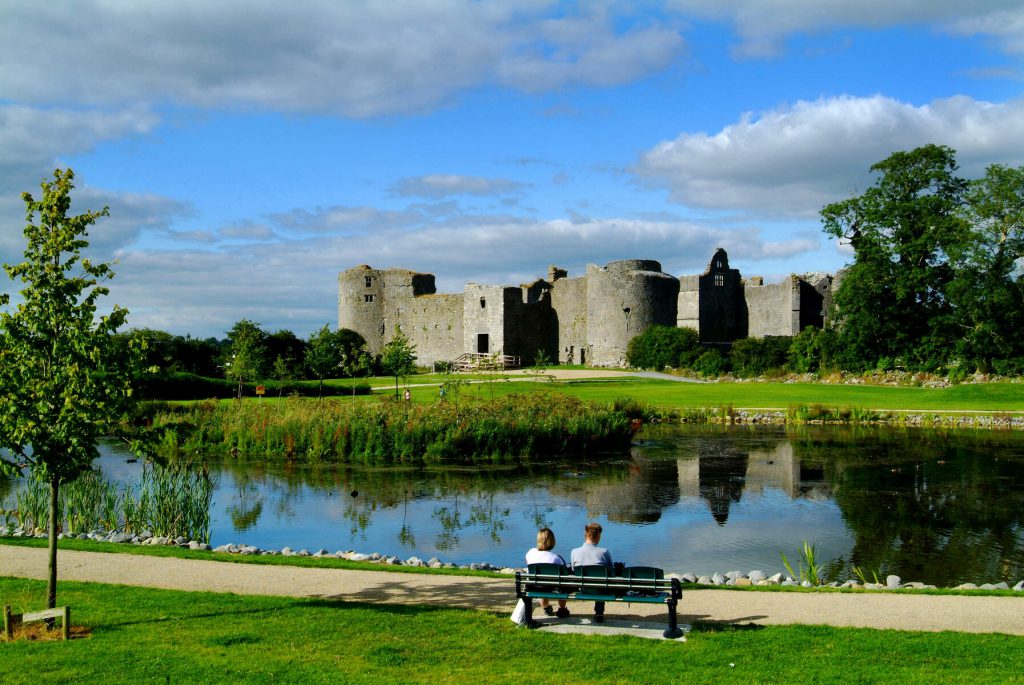
The county town is Roscommon itself and is the location of a notable archaeological find in 1945 when a lunula, a gold necklace, and two discs were discovered. Both items are dated to the period 2300 and 1800 BC. Roscommon Castle is located on a hillside just outside the town. Now in ruins, the castle is quadrangular in shape, it had four corner D-shaped towers, three storeys high, and twin towers at its entrance gateway, one of which still retains its immensely sturdy vaulted roof.
Another important landmark, Harrison Hall, is located prominently in the market square and is now occupied by the Bank of Ireland. Most of the ground floor of this 17th century sessions house is open to the public.
It became a Catholic church in 1863, a recreational hall 40 years later to commemorate Dr John Harrison (who was a physician in Roscommon town’s workhouse, during the famine of the 1840s), and it was used as a dance hall, cinema and theatre at various stages.
The old gaol is located at the northern end of the square and faces the back of Harrison Hall. The original building is thought to have been designed by Richard Cassells in 1736.
The building was completed in 1745 and it’s had a distinctive past in having had a hang woman, ‘Lady Betty’, a criminal who had her sentence withdrawn on the provision that she perform the unpaid task of hang woman.
In 1822 the old gaol was taken over for use as a “lunatic asylum”, later a place where outcasts suffering from smallpox were confined, but today all that remains is the facade, the rest has been developed as a big modern building housing retail, office, and residential units as well as a car park.
Other towns and villages of note are, of course, worth a visit and they simply have to be listed to remind tourists of what to expect in a jaunt around this intriguing part of the Irish landscape. So when considering a trip to Roscommon, check out Ballaghaderreen, Ballintober, Boyle, Castlerea, Creggs, Elphin, Frenchpark, Keadue, Knockcroghery, Roosky, Roscommon, and Strokestown.
That’s not to mention some of the attractions and activities around the county that have to be on the to-do list.
These would include (as suggested by Roscommon Tourism): Boyle Abbey which dates back to the 12th century. The Abbey has endured many sieges and occupations over the years but its ruins remain a well-preserved example of Cistercian architecture. Look up so you don’t miss the original stone carvings that survived its time as an English garrison base. You can’t miss the Abbey in the center of Boyle and it’s open from Easter to October.
Chart the history of coal mining in Roscommon’s northern hills at Arigna Mining Experience. Covering 400 years of mining history, until the last mine closed in 1990, immerse yourself in the difficult and dangerous life underground. Discover a part of Irish history that you may not know about.
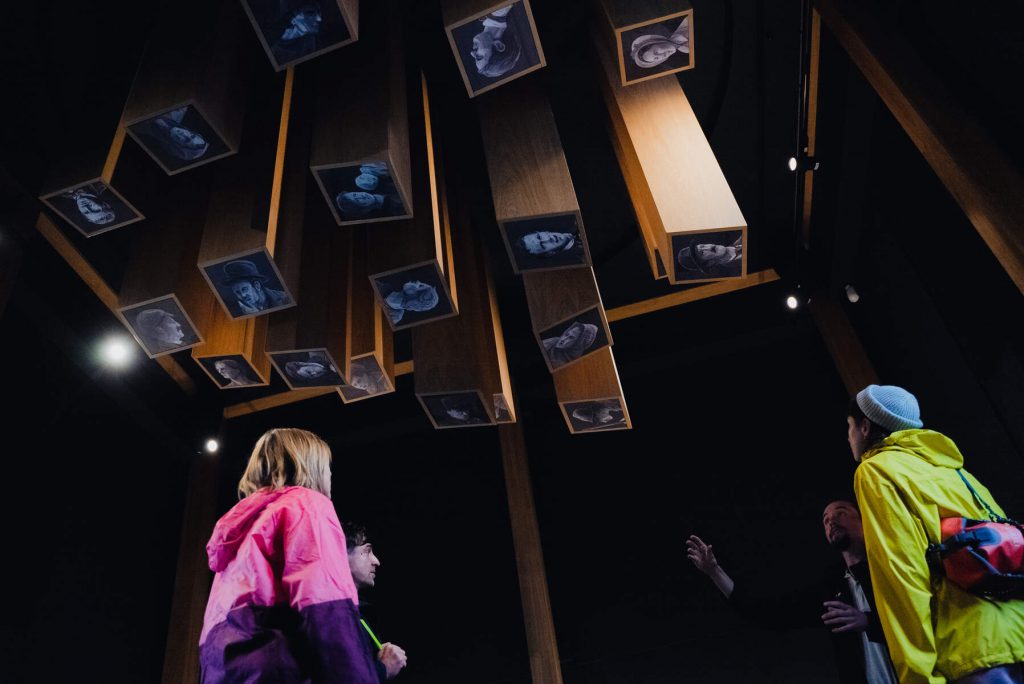
Yet another Georgian building that’s been lovingly restored is Strokestown House and Gardens. One can an take a guided tour, stay overnight, enjoy a meal at its restaurant or walk through its incredible gardens. The home of the first landlord to be assassinated during the Great Famine, it also has a National Famine Museum on its grounds.
The home of the legendary Queen Medb, Rathcroghan is a special place that has an incredible 240 archaeological sites and 60 protected national monuments in its surroundings. Known as the Sacred Capital of Connacht, its surviving structures include the mysterious Oweynagat (Cave of the Cats), known as Ireland’s “Gate to Hell”. The exhibitions at the Rathcroghan Visitor Centre uncover its history, its place in Irish mythology, and its cultural impact on Ireland and the wider world.
You might be surprised to find a delightful 18th century windmill in Roscommon, but Elphin Windmill was originally used to grind wheat and barley before falling into disrepair in the early 19th century. The local community restored in it the 90s and it’s now a working windmill with a visitor center that explains how the windmill works.
Shannon River Adventure is a different spin on outdoor adventure, a center located beside Lough Bofin on the River Shannon at close to the villages of Rooskey and Dromod.
This adventure offers many fun filled water and land based activities, including kayaking, canoeing, archery, mudslides, orienteering, pier jumping, a climbing wall, island trips, and adventure camps. There is something to challenge and reward all ages and abilities.

Take a deep dive into the past at the award-winning Derryglad Folk and Heritage Museum in Curraghboy, which houses a unique 35-year collection of over 6,000 items. It features everything from farming tools to early electrical equipment to household items that would have been in every home in days gone by. Younger visitors might be baffled by some items but it’s a fascinating look at the way that Irish life has changed over the generations.
Walkers aren’t neglected either in a county that has many trails on offer, but the jewel in the crown is the spectacular Suck Valley Way, a 60 mile plus loop walk that forms part of the 300 mile Breifne Beara Way which immortalizes the flight of Donal Cam O’Sullivan-Beara, and his followers from Cork to Leitrim.
The walk goes through riverbanks, down sleepy side roads and through woodland. Visitors will discover castles, abandoned churches and rare Gaelic relics like the ancient La Tène Stone at Castlestrange Demense along the way.
But fear not – there are also a number of shorter loops to choose from if you don’t want to commit to the five days it takes to complete the entire way!
Check this County’s bounty and beauty out on discoverireland.com/roscommon