

New York is has always been and is becoming even moreso a place to showcase new talent from Ireland — especially works created women. Recently Irish Repertory presented “Woman and Scarecrow” to much positive response by writer Marina Carr.
Now a mainstay of the off off Broadway scene, The Soho Playhouse (15 Vandam Street) — which has served the downtown theater community as an historic 199 seat Off-Broadway venue for years — is debuting new works in North America of two Irish female playwrights. Eavan Brennan’s “Get the Boat” and Colette Forde’s “Innit” were both featured productions at the Limerick Fringe Festival this past year. Both shows began July 6th and will run through August 5th, 2018.
It was on the Playhouse’s stage that Edward Albee produced many first works of Terrance McNally, John Guare, Lanford Wilson, Sam Shephard, AR Gurney and Leroi Jones. On a mission to preserve and protect the Off-Broadway’s downtown theatre scene, artistic director Darren Lee Cole has furthered that effort when he joined in 2004.
East Clare native Eavan Brennan was a member of Limerick Youth Theatre and become a founder of Holy Show Theatre company in 2004. She then attended the Edinburgh Fringe Festival with their inaugural show “After Andersen” by Fionn Dempsey which also toured Ireland. She has worked with numerous productions in Ireland and moved to France to do Shakespeare.
Her production, “Get the Boat,” tells of two strangers who meet on a journey many Irish women still perform that is one their biggest secret. This poignant, gruff, funny piece about life shattering decisions and the secrets that get shared. Get The Boat is produced by Holy Show Theatre Company.
Born in Dublin, in February 1983, Colette Forde moved to Manchester later that year. She started acting at six years old until she was 19 and then took a break to be a lead vocalist and dancer in the U.K. Ten years later, she is now a well-established professional actress and singer/songwriter in Cork City since her return to Ireland. for the last 15 years, she been in numerous short films and theater production but most recent has focused on this one woman show.
“Innit” is about teen Kelly Roberts as she visits a psychologist. Bold, vulgar and broken, she copes with teenage angst in working class Manchester set in the 1990s . As she unwittingly discloses her heart-breaking secrets she prompts both laughter and tears.
In order to better explore who these two creators are, the following set of questions was posed to the both of them.
Q: I assume these were both based on people you met or had some experience with. can you elaborate on the origins of these two stories/characters?
Eavan Brennan: The two characters in “Get the Boat” are a big mix of lots of people. It’s hard to describe how soaked Ireland has been in this discussion running up to the [abortion] referendum and how very many women opened up about their experiences in order to show the diversity of reasons and choices there are.
These two are a real jumble of so many stories. The characters really represent what was the central discussion of the referendum. Is there good and bad when it comes to terminations? Grainne G for good and Brigit B for bad. Good (read morally ok) are cases of rape, incest and fatal foetal anomaly, and bad are the cases that people sometimes find more difficult to understand. Hopefully however the play goes at least a little way towards opening up the discussion and say least allowing the audience to consider the human being behind the law we are discussing.
Q: What playwrights living or dead do you consider as influences?
EB: My uncle Tom Murphy, who passed away very recently, was a prolific Irish playwright and certainly an inspiration. In every play he excoriated respectable catholic Ireland and lifted up the warmth, the love, the pain and the unfairness of the human experience. He wrote without fear and put the darkest parts of himself on stage. I admire that so much.
I also adore Kate Tempest who has written plays among the hundreds of other genres of writing she drags her pencil through. Like Tom she pours heart and fire onto the page and reaches straight past your brain into your heart. I always look for that in writing, either it changes my life or I don’t have time for it.
Q: What made made decide to create your own stories?
EB: In the campaign I kept running up against the difficulty of getting people to see the human face of each decision. Most of this play is simply two girls who’ve only just met, laughing, messing and chatting. Yes we figure out that they have huge things going on in their lives but don’t we identify with that? Don’t we laugh at funerals and make breakfast for giggling children while our world crumbles?
I began my involvement in the grassroots movement to repeal the eighth amendment with a group called ‘Parents for Choice’ and this play is a story of termination in a family context. Over half of the Irish people who accessed abortion care in the UK were already parents and the heartbreaking stories of mothers traveling alone to terminate much wanted pregnancies that had no hope of survival outside the womb and driving home with their mourned child in the boot of their car or receiving remains in the post needed to be shouted from the rooftops. Its absolutely barbaric, we were failing the women who needed us most. This play was a call to action but also a call to empathy, we may never know what it is like to walk in someone else’s shoes but in these tragic, shameful cases how lucky we were, luckier than we could ever understand.
Q: How do you both cope wth getting that context across without making it obvious.
EB: I think avoiding any discussion of the law or the political context was how I managed that. Sticking to the two women and their stories not only hopefully avoids preaching but also reminds people again of the human aspect of the debate
Q: What do you have in mind for this play to expand it into a longer more elaborate piece or is it a shorter experiment leading to something else altogether?
EB: I have a few things I’d like to do with it. Get the Boat was originally a spoken word piece which I still may write to performance standard. I think you have to be careful with prescribed versions of length. This play is the length it needs to be and is whole as such. However Siobhan who acts and Ruth who directed are both beautiful writers and I’d love to make a WayWord triptych with three pieces of which we have each written one.
Q: What are the difference in audiences here and in Ireland
EB: An Irish audience really has the context of get the boat having lived the referendum and of course most of them will also have lived the 35 years of the 8th amendment. It’s more immediate, like pressing an open wound. New York audiences have been very present, very generous with their laughter and tears and we really look forward to the next few weeks of shows and talk backs.
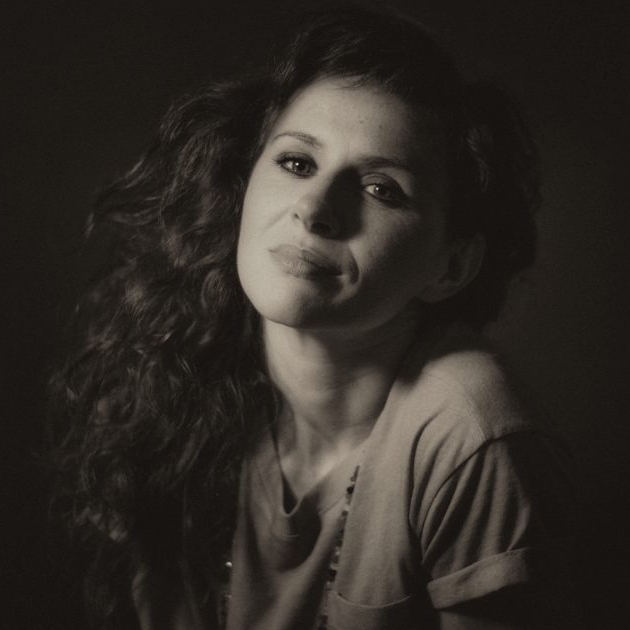
Collette Forde: Kelly is an amalgamation of girls that picked on me at high school with a lot of my own personal backstory woven in. A lot of the events that we learn about Kelly’s life, occurred in mine.
Q: Can you elaborate on the origins of these two stories and characters?
CF: I decided that it could be interesting to explore the probable backgrounds of these type of girls we all [meet] at school, using my own life experience! Only lucky for me, I did have support and a lot of love behind me.
Kelly is quite possibly the girl I could have been without this. I think it’s fair to say that more often than not, these troublesome teens are a direct result of hardship and a significant lack of care at home and their environment. Not in a “let’s always blame the parents way” but we all have our own varying levels of sensitivity and needs which may not be met, or met in the way that they need or understood.
Teens are complex and the ones within my reach that I had difficulty with all came from broken homes like myself — working class backgrounds and dysfunctional family challenges, all operating in the more unfavorable areas of town. I can relate to these girls a great deal for the most part, but I was lucky. You never know what is going on behind closed doors.
Q: What playwrights living or dead do you consider as influences?
CF: I am in my infancy as a writer but I love Martin McDonagh, a dark Irish playwright. I pay more attention to the story and performances i suppose.
Q: What made made decide to create your own stories?
CF: I like writing about real events as I do when I’m songwriting, although I’ve just finished another play that doesn’t hold as many truths as innit, but it is also dark. I wanted to create work for myself and autonomy, to accomplish something finally that I had full ownership of. But now, my reasoning has evolved to try to inspire teenagers to go and have therapy! Adults even. Let’s de-stigmatize this whole concept of therapy – weak or freak. We’re all human, we’re not supposed to do this alone!
Q: What do you both have in mind for these two plays
CF: I want to push the message outside of just a theatre setting, that we need to reach out to people or professionals and acknowledge our vulnerabilities and shame. No-one is exclusive to either of those feelings. I especially want it to reach teens in hand with workshops I’ve developed especially to lift the mystery around therapy. I utilize my UK, NSPCC phone counselor training and personal past therapy sessions plus other exercises to create an environment that’s fun, safe and open. The schools I’ve been to so far have begun to change their perception of what it means to get professional help, or just talk.
Q: Are they just shorter experiments leading to something else altogether to expand them into longer more elaborate pieces?
CF: “Innit” is complete for the time being, it’s the aforementioned workshops I would like to get going. Kelly Roberts is the perfect representative for teens to relate to.
Q: What are the differences in audiences here and in Ireland?
CF: So far, not much. just a couple of Mancunian phrasings have been removed or altered. Also I had to slow down my accent a great deal, I was worried it would compromise the charm of the play but actually it has given me room to improvise which keeps it fresh. Each audience is getting a slightly different show! Everyone has felt like Kelly, sadly! C