
By Barry Coughlan
Dublin has it all, although over in the west Galway people will say that Dubliners only think they have it all!
A rare stroll around the main shopping areas of Dublin city last week reminded me – happily – of all the times I had spent working and virtually staying for chunks of my life in the capital.
They were fond memories no doubt of my time operating out of the then Cork Examiner office on Aston Quay, just off O’Connell Bridge, before subsequent moves to the other equally memorable location in Baggot Street. By the time the company moved to Harcourt Street, technology had eradicated the need to work in office space and my time in the workplace was coming to a close anyway.
But people-watching the crowds of tourists line up in queues outside of Trinity College, and regular listening stops in front of some amazing buskers on Grafton Street put a buzz back in the air for me. Dublin still has that special vibe, no question, no doubt.
It’s that type of buzz that any self-respecting Galwegian would say exists around their more compact city day in, night out, with or without the same masses of overseas visitors. But, hey, Galway is host to lots of them too.
Without question Dublin is, as it should be, a magnet for tourists from all over the world but there is life beyond and Galway, with a quirky charm that captivates the heart, is not just a genuine small city destination but a gateway to a part of Ireland that should be high on every tourism bucket list.
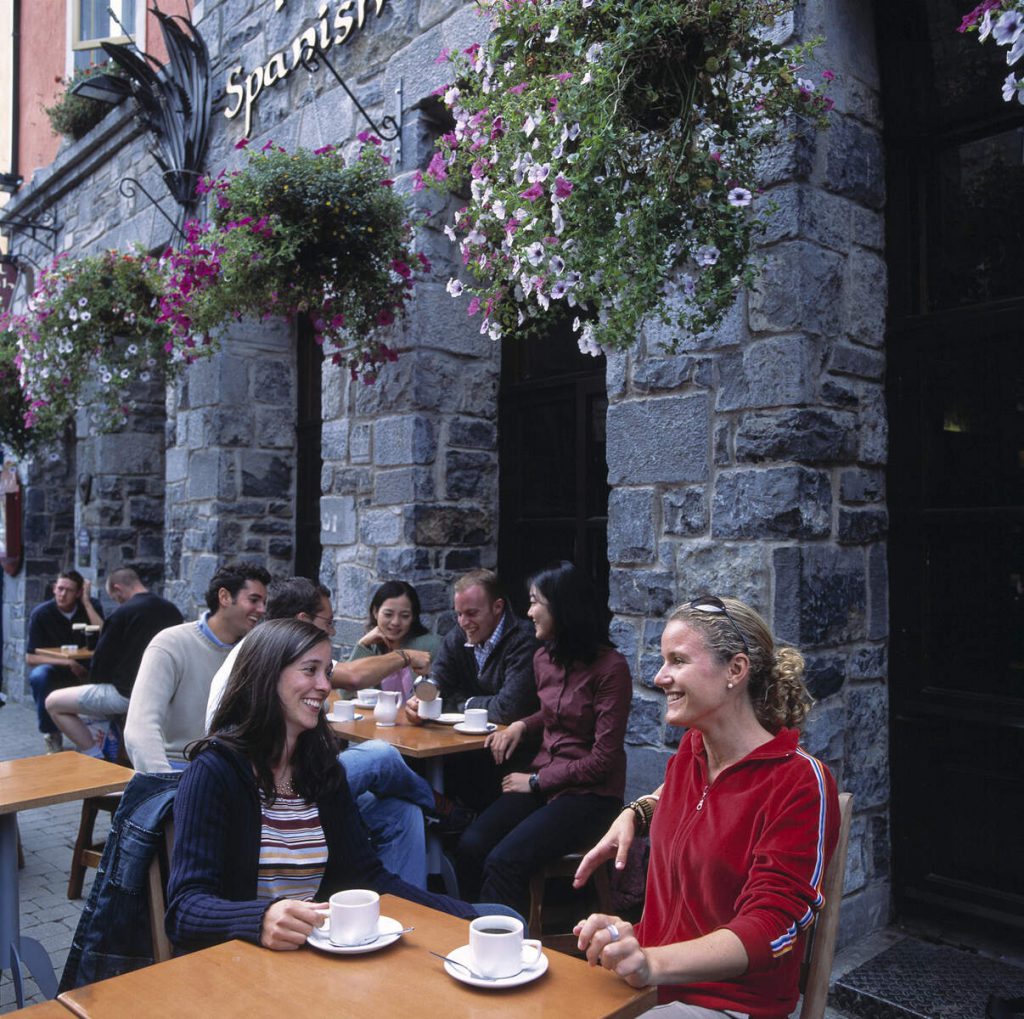
In much the same way as Dublin has, in the Temple Bar area, made a name for hosting Stag and Hen Parties, you’re just as likely to see “L Drivers” and their followers trawling through the center of Galway at all sorts of strange hours for drinking (translation- morning, noon and night!).
A good reason is that nobody has to stray too far to enjoy a variety of night time activities centered in the pubs and clubs where music for all tastes is a large part of the deal.
Inevitably in such an historic part of Ireland, traditional music plays a bigger role than any other genre, and at any time of the year there will be nightly sessions in one of many pubs which can be previewed on www.galwaytourism.ie.
But there is more to Galway too; it’s not all about the music and fun; it can be about the arts, theatre or otherwise.
Visitors should also pay a visit to the Galway City Museum which overlooks the famous Spanish Arch and hosts a wide variety of permanent exhibitions for adults and children ranging from Prehistoric and Medieval Galway to the 1916 revolution, The Great War and sporting history through the GAA. The museum is open Tuesday through Saturday from 10 to 5 pm, and admission is free. www.galwaycitymuseum.ie.
The popular weekend market surrounding St Nicholas’ Church in the center of town is a colorful, aromatic and musical place to indulge the senses when visiting the city. The market has stalls of locally made food, art, crafts and unique bric-a-brac. Details on www.galwaymarket.com.
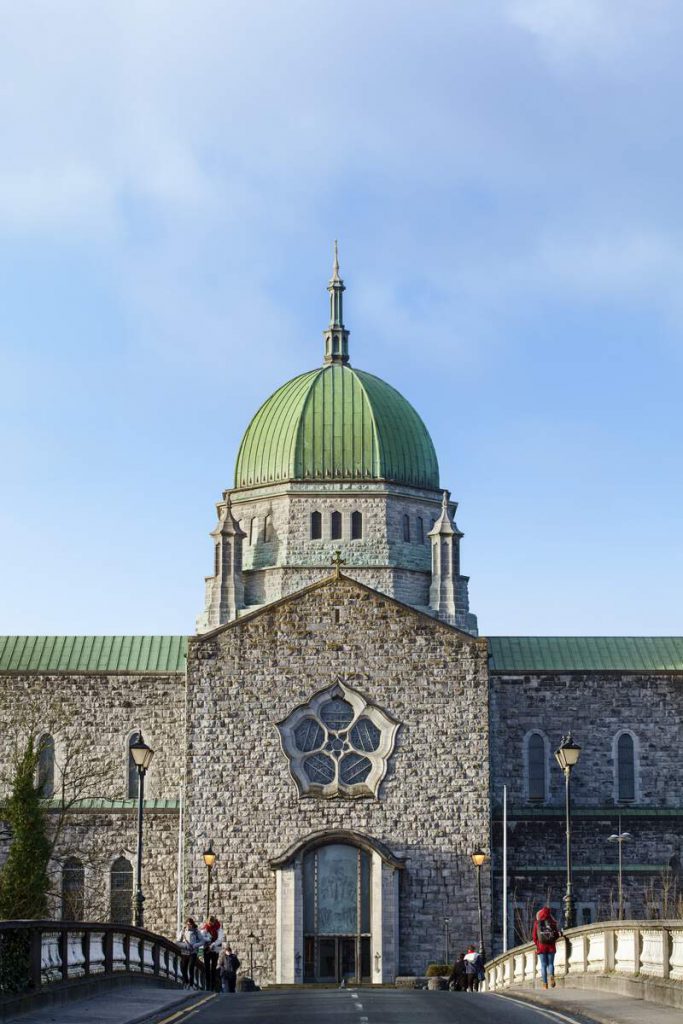
Galway Cathedral is one of the most distinctive landmarks and a popular attraction for visitors to the city. At approximately 45 meters tall, it is a prominent feature of the skyline.
There are few enough cities in the world boasting adjacent beaches but Galway in one of them, and Salthill, which is just a walk away, is effectively an independent seaside resort with a number of distinct beaches so popular that they are monitored by lifeguards through the summer season from May to September.
Those looking for a break from the hustle and bustle of the city should take time to discover Barna Woods and Rusheen Bay Nature Reserve where nature takes over and visitors are offered time for quiet reflection.
Of course, there is all of that and more in the great beyond in the magic of a different side of Ireland. Visitors, I promise, are in for an unforgettable journey through the wondrous scenery of Connemara and onwards to the islands, Inishbofin for instance, or the more distant but hugely popular Aran Islands.
Galway city may be the heart of the Irish Wild Atlantic Way but a big part of its soul is out in the countryside and an unhurried trip through Connemara is an unforgettable experience that should be an essential part of any trip to Ireland or for those living within.
The region is a land of contrasts – its backdrop of the Twelve Bens and its extensive bog complex, its multiple peninsulas and inlets, and its unique islands, all steeped in age-old Irish Gaelic culture and tradition; it’s where writers, artists and musicians have been inspired to produce their work over centuries, not just decades.
Oscar Wilde described Connemara as a savage beauty and it’s all that and more; it lives up to a widespread view that here is where the real beauty of Ireland lies.
Geographically, the region of Connemara is in the north-west corner of the county and is considered to be the land west of Lough Corrib. On the north side of Connemara are Killary Harbor, the south side Galway Bay and the west side the Atlantic Ocean.
One can explore Connemara by bus; however, the reality is to see it properly, to properly embrace the views and the landscape, to become fully aware of the difference and to properly take in that difference through talk with its people and experience of its music and culture. For all that, independent transport is essential.
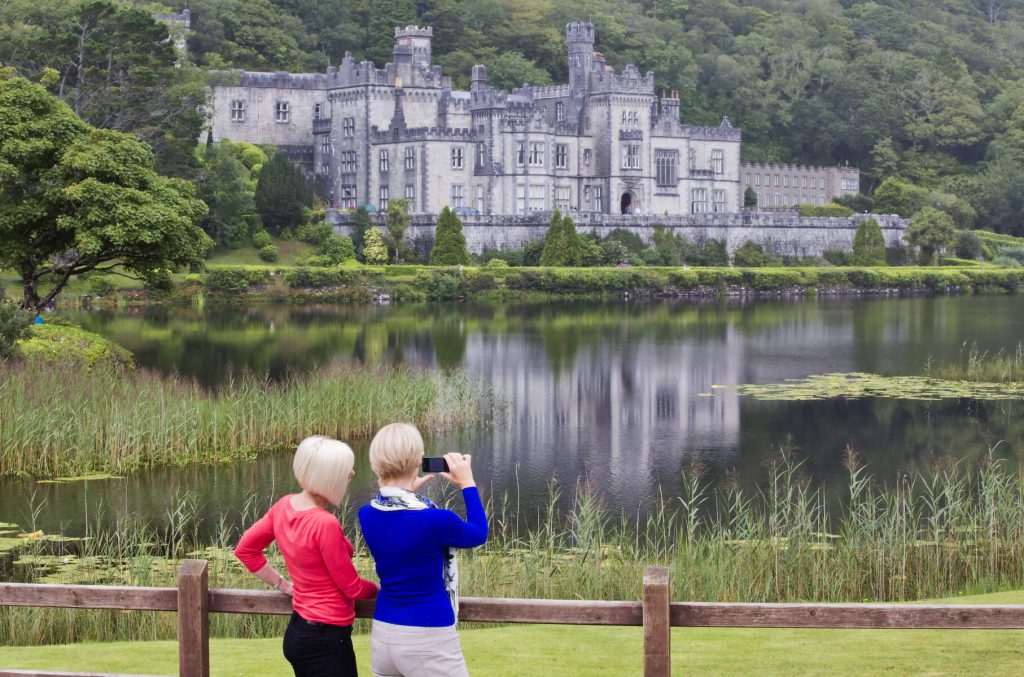
Connemara is peppered with some very interesting attractions like the Alcock & Brown Memorial, Kylemore Abbey & Walled Victorian Gardens, Connemara History & Heritage Center in Clifden, Glengowla Mines in Oughterard, Dan O Hara’s Homestead and the 40,000 acre Connemara National Park.
You’ll know you’re in Connemara when you enter a vast beautiful bogland, when the landscape becomes a mixture of rivers, lakes, of woodlands, meadowlands, and dramatic hills and mountains, especially the Twelve Bens. Oh, and the stone walls, miles and miles and miles of them.
This is a playground for outdoor activities, where you can enjoy horse riding, cycling or hiking; indulge in watersports, or maybe a less taxing spot of fishing or round of golf.
The population of Connemara is 32,000 and of that there are between 20,000–24,000 native Irish speakers in the region, making it the largest Irish-speaking Gaeltacht.
The Enumeration Districts with the most Irish speakers in all of Ireland, as a percentage of population, can be seen in the South Connemara area. Those of school age (5–19 years old) are the most likely to be identified as speakers.
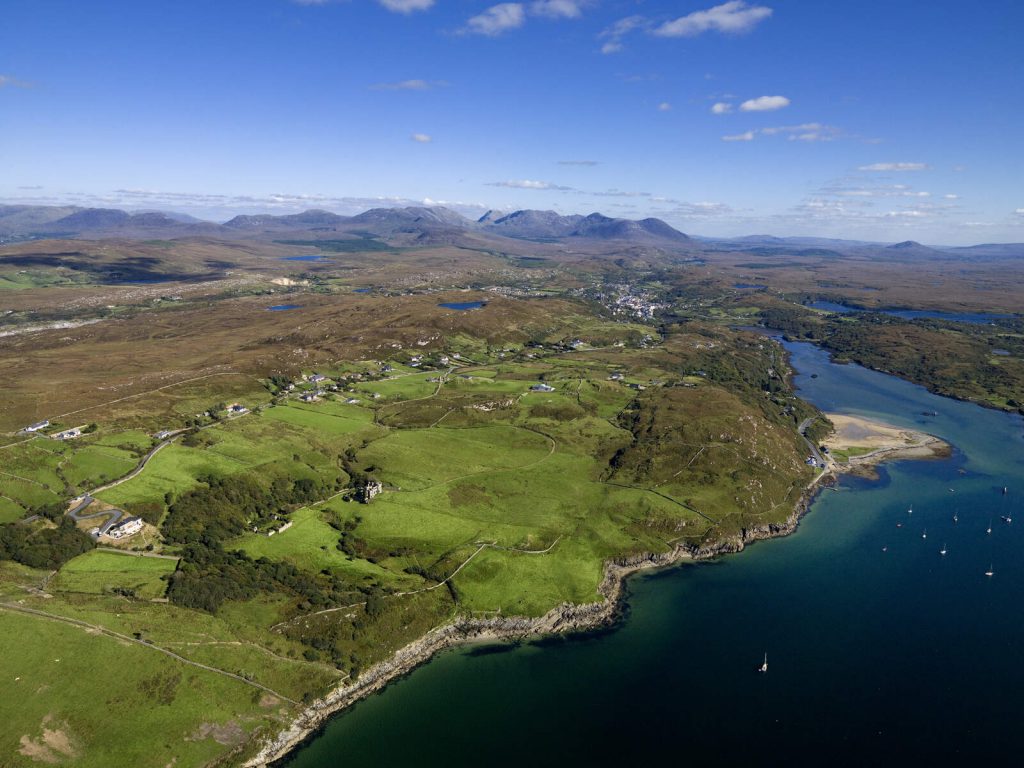
The main town of Connemara is Clifden which is surrounded by an area rich with megalithic tombs. A trade treasure once upon a time was the famous Connemara Green Marble which continues to be of great value today; it’s available in large dimensional slabs suitable for buildings as well as for smaller pieces of jeweler.
An additional lure is the fact that the first transatlantic flight, piloted by British Aviators John Alcock and Arthur Brown landed in a boggy area near the town in 1919.
Cleggan (departure point for Inishbofin) and Renvyle are found in the north-west of Connemara. Of the numerous islands off the coast of Connemara, Inishbofin is the largest; but other islands include Omey, Inishark, High Island, Friars Island, Feenish and Mainis.
There are other must-see parts too – the little fishing village of Roundstone, Leenane, made famous through the movie The Field and a place that hosted a Connemara Mountain Walking Festival last year, while Spiddal is a picturesque seaside village. These and more.
The Aran Islands, a group of three islands at the mouth of Galway bay are Inis Mor (the largest), Inis Meain and Inis Oirr with a combined population of 1250, down since a 3,500 high in 1841. Inis Meain is the least popular in terms of visitor numbers but many who have savored the experience say it has just as many endearing qualities.
There are ferry services to all three from Galway, Rossaveal and Doolin and flights from Connemara Airport with Aer Arann Islands
All three islands have varied accommodation options for differing budgets and there is also self catering, glamping and camping opportunities.
Meanwhile, a 30 minute ferry ride away from Cleggan is the island of Inishbofin, which gives another real taste of what Connemara has to offer – stunning Atlantic coast scenery, spectacular walks and award winning beaches that make perfect conditions for water based activities.
That throws up another idea. What about a holiday option in Galway and the West of Ireland – Island hopping?
Well, they do it in Greece do they not, and it’s not always all about the weather either, is it?