
 An alleged member of so-called Islamic State has been sent forward for trial to the non-jury Special Criminal court.
Lisa Smith, 38, from Co Louth has been charged with the membership of an unlawful organization under 2005 terror legislation and terrorist financing.
At Dublin District Court last Friday she was further charged with providing financial assistance to another in the sum of €800 under Section 13 of the Terrorist Offenses Act.
This offense is alleged to have happened within the Irish state in 2015.
She is denying the allegations.
The state solicitor said the charges were non-scheduled offenses and it was the opinion of the Director of Public Prosecution that the ordinary courts “were inadequate to secure the effective administration of justice” in this trial.
The 38-year-old, who is a former member of the Irish Defense Forces, appeared at Dublin District Court on Friday.
Smith was in court on Friday to be served the book of evidence which was in a stack of thick volumes of documents.
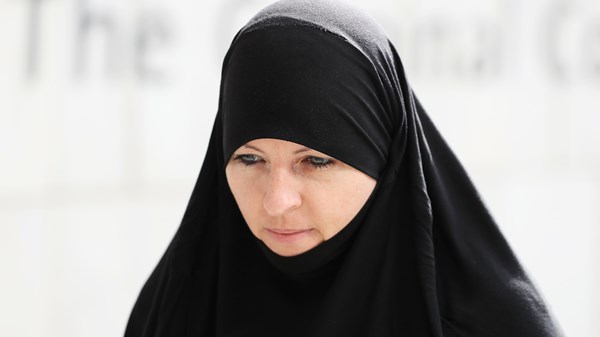
Smith, who wore an Islamic dress and hijab with her face uncovered in court, sat silently throughout her brief appearance.
Smith was arrested at Dublin Airport in 2019 on suspicion of terrorist offenses after returning from Turkey in November with her young daughter.
She had traveled to Syria a number of years ago after she converted to Islam.
Smith is charged that under Section Six of the Criminal Justice (Terrorist Offenses) Act 2005 which makes it an offense to join a foreign unlawful organization.
It is alleged that between October 28, 2015 and December 1 2019 at a location outside the State, she was a member of a terrorist group styling itself the Islamic State.
The charge carries a maximum penalty of 10 years in prison, the court heard.
Smith’s defense solicitor Peter Corrigan said Smith told the court his client was never a member of an illegal organization.
“The current available evidence points to the defendant not being part of any illegal groups,” he told the court
Judge Marie Quirke told Smith she has 14 days to come up with names and addresses of people who would be able to prove she was not in the areas where the alleged offenses occurred.
The Special Criminal Court, where Smith’s trial will take place, is a three-judge criminal court that deals with terrorist and organized crime cases.
The court has no jury in order to avoid any potential intimidation of jury members, which has led to criticism from human rights groups.
Mr Corrigan said there would be a challenge in relation to his client being sent for trial at the Special Criminal Court
Mr Corrigan previously said the decision to try the case in the Special Criminal Court denies Smith of her fundamental right to a jury trial.
A further application of legal aid was granted to Smith.