 Each week we will highlight one artist from Paddy McCarthy’s regular Music And Entertainment Guide for your reading pleasure. To read the full weekly guide, visit our ePaper.
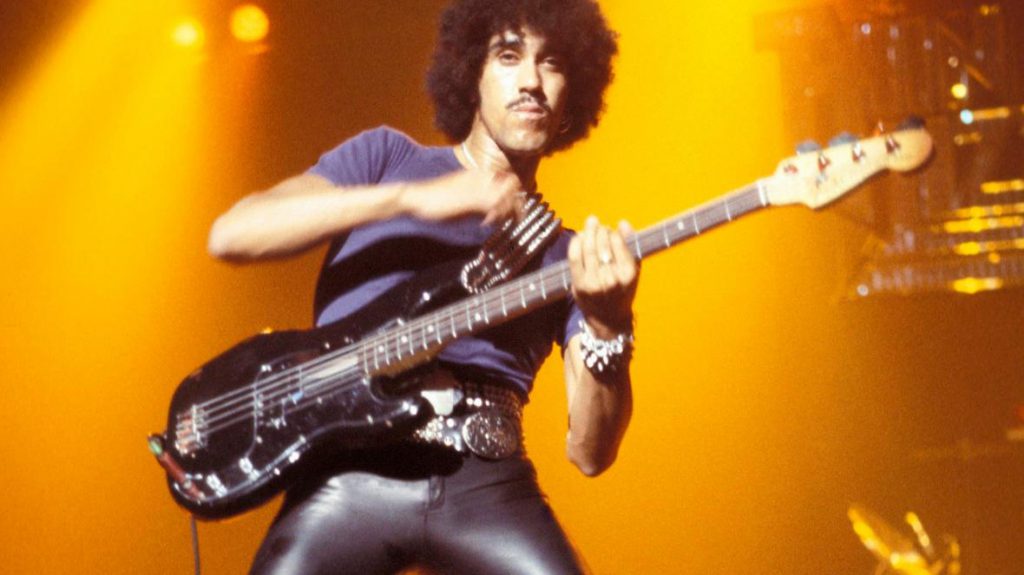
Phil Lynott was one of the greatest rock and blues bass guitarist ever to come out of Ireland and with his band Thin Lizzy they were on fire. Phil left us at a very young are of 36 and he was only starting and here we have a little history on him. He was known for his imaginative lyrical contributions including working class tales and numerous characters drawn from personal influences and culture. Lynott was born in the West Midlands of England, but grew up in Dublin with his grandparents. He remained close to his mother, Philomena, throughout his life. He fronted several bands as a lead vocalist, including Skid Row alongside Gary Moore, before learning the bass guitar and forming Thin Lizzy in 1969. After initial success with “Whiskey in the Jar”, the band had several hits in the mid-1970s such as “The Boys Are Back in Town”, “Jailbreak” and “Waiting for an Alibi”, and became a popular live attraction combining Lynott’s vocal and songwriting skills with dual lead guitars. Towards the end of the 1970s, Lynott embarked upon a solo career, published two books of poetry, and after Thin Lizzy disbanded, he assembled and fronted the band Grand Slam, of which he was the leader until it folded in 1985.
Following Thin Lizzy, Lynott increasingly suffered drug-related problems, particularly an addiction to heroin. In 1985, he had a final chart success with Moore, “Out in the Fields”, followed by the minor hit “Nineteen”, before his death in 1986. He remains a popular figure in the rock world, and in 2005, a statue in his memory was erected in Dublin. Born in England and raised in Ireland, Lynott always considered himself to be Irish. His friend and Thin Lizzy bandmate Scott Gorham said in 2013: “Phil was so proud of being Irish. No matter where he went in the world, if we were talking to a journalist and they got something wrong about Ireland, he’d give the guy a history lesson. It meant a lot to him. In the early 1980s, he purchased several properties in Howth, County Dublin, one of which, White Horses, was a 50th birthday present for his mother.”