
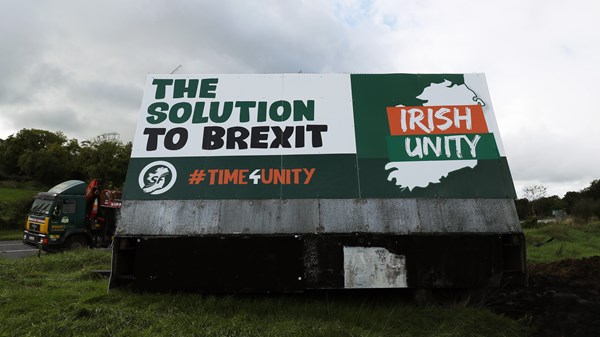
 A deep divide between Northern Ireland’s parties over Brexit is set to dominate the forthcoming UK general election.
It has been more than three years since the UK voted to leave the European Union, but at that 2016 referendum, a narrow majority (56%) in Northern Ireland opted for Remain.
The DUP has been firmly in the Leave camp, while their nearest rivals Sinn Féin have been strongly opposed to the North leaving the EU with the rest of the UK.
The SDLP and Alliance are pro-Remain while the UUP was split during the referendum but officially campaigned to Remain.
However, with Sinn Féin’s seven Westminster MPs not taking their seats there and the Stormont Assembly not sitting, the DUP’s 10 Westminster MPs have been the dominant voice for Northern Ireland, with independent Lady Sylvia Hermon the only other representative for the North in the House of Commons.
Brexit has brought the constitutional status of Northern Ireland back to the fore, with disagreement over the future of the border having already sunk two proposed withdrawal deals.
Fears have been voiced over dissident republican violence in the event of a hard border, while British Prime Minister Boris Johnson’s most recent proposal of an effective trade border down the Irish Sea sparked outrage among unionists and accusations of betrayal from loyalists.
Sinn Féin has already selected a number of candidates to contest the long-expected Westminster election, including Belfast Lord Mayor John Finucane to challenge DUP deputy leader Nigel Dodds’ slim majority in North Belfast.
At its selection meeting last month, the party said it would be “open to an arrangement” between pro-Remain parties to oust DUP MPs.
Meanwhile, on the unionist side of the fence, incoming UUP leader Steve Aiken has attracted criticism by ruling out his party stepping aside in certain constituencies – including North Belfast – to allow DUP candidates a clear run.
Even with controversy about the now two-and-a-half-year-old collapse of devolved government, as seats in the North’s 18 constituencies fall vacant again, Brexit and its potential impact is likely to be the dominant issue on voters’ minds.