
Exclusive Q&A by Brad Balfour, Arts Editor
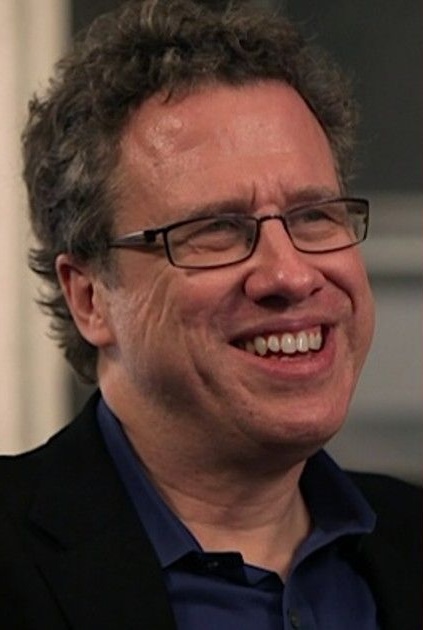
On Saturday, November 22, the Big Apple Comic Con holds its annual holiday event in advance of the Christmas season. One of the treats during the con is the presence of veteran comic book creator and writer Danny Fingeroth who will be signing his books there.
Besides being known for all his work with Marvel during the 1980s and ’90s, he founded and went on to edit Write Now! (TwoMorrows Publishing), an authoritative magazine about the craft of comics writing, which ran for 20 issues from 2003 to 2009.
Then in the 2004, he turned to writing prose books starting with “Superman on the Couch: What Superheroes Really Tell Us About Ourselves and Our Society” for Continuum Publishing. Then came “The Rough Guide to Graphic Novels” (featuring artwork by Mike Manley).
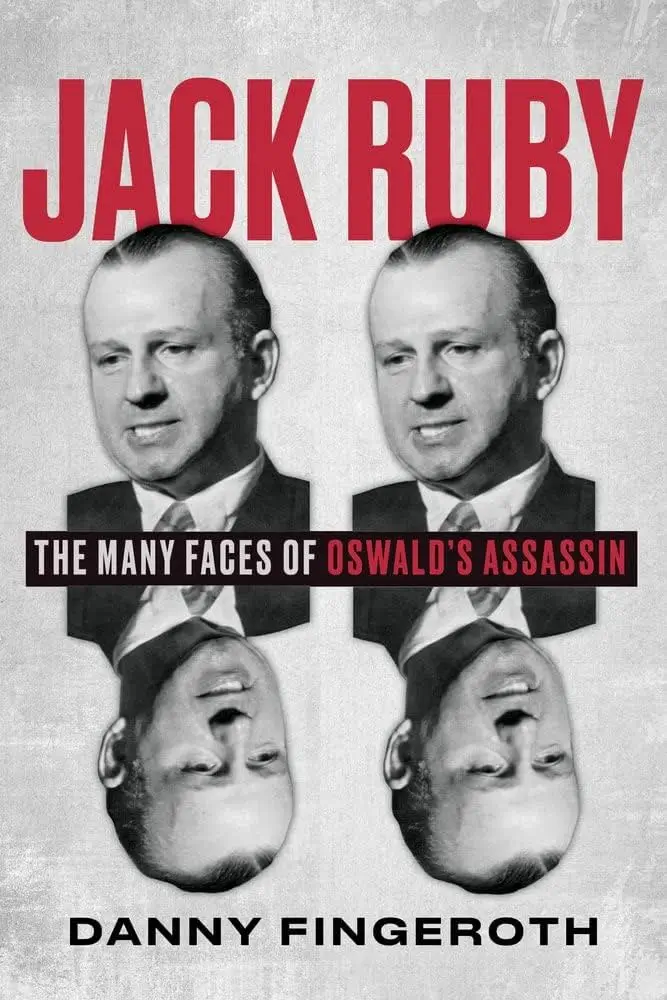
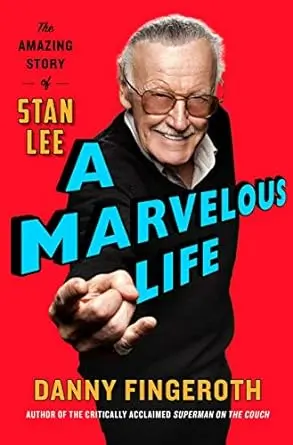
Fingeroth expanded further into writing fully realized prose books. From such comics related full length editions as “A Marvelous Life: The Amazing Story of Stan Lee,” to “Disguised as Clark Kent: Jews, Comics, and the Creation of the Superhero” and his latest, “Jack Ruby — The Many Faces of Oswald’s Assassin” This Murder mystery explores the strange life of themas who assassinated Lee Harvey Oswald — who was the man accused of being the lone killer of President John F. Kennedy.
Born in New York City on September 17th, 1953, Fingeroth got started in the comics business in 1976 as an assistant to Marvel Comics’ Larry Lieber. During the ’80s, he edited the Spider-Man titles as well as Marvel Team-Up and Ka-Zar. Fingeroth was the group editor of the Spider-Man titles from 1991 to 1995, including the first part of the clone saga.
Establishing his authority as a comic book writer, Fingeroth worked on “Darkhawk,” writing all 50 issues between 1991 and 1995. Before that, he had a long stint on Dazzler, wrote “The Deadly Foes of Spider-Man,” “The Lethal Foes of Spider-Man” mini-series, the “Howard the Duck” movie adaptation comic and various issues of other Marvel titles, including Avengers, Daredevil, Iron Man and What If?, as well as “The Deathtrap: The Vault” graphic novel.
Fingeroth left Marvel in ’95 to become editor-in-chief of Virtual Comics for Byron Preiss Multimedia and AOL. Then, he served as senior vice president for creative development at Visionary Media, home of Showtime’s WhirlGirl, for which he served as story editor.
He has created and ran literally hundreds of pop culture panels, events and curated exhibitions related to comics and their history.
The boyish looking author has spoken and taught about popular culture at venues including the Smithsonian Institution, the Metropolitan Museum of Art, Columbia University, the Pop Culture Association, San Diego Comic Con, the Bob Dylan Conference in Tulsa, the Center for Jewish History, and the Sixth Floor Museum in Dallas. He has discussed pop culture on NPR’s All Things Considered and NBC’s Today Show, and has written about them for publications including The Los Angeles Times and The Baltimore Sun.
Fingeroth also serves as an overall consultant to Will Eisner Studios and the Will and Anne Eisner Family Foundation. And now, as Chair of Will Eisner Week, he looks forward to the annual series of close to 100 events worldwide celebrating the legacy of this pioneering graphic novelist.
Q: What prompted you to write this? When and how did your interest stir?
Daniel Fingeroth: As a boomer, the JFK assassination was one of the pivotal moments of my life. Ditto for the murder of Lee Harvey Oswald on live TV by Jack Ruby. So I always was fascinated by it. But it seemed too big for me to try to “solve”? I’d heard a hundred theories that contradicted the official assessment given by the Warren Commission Report: that Ruby and Oswald were “lone nuts” who were not part of any conspiracy. That seemed too pat, but even the more reasonable alternate theories didn’t seem to make an airtight case, either. So it was, my mind, a riddle that would remain unsolved.
Then in 2013, around the 50th anniversary of the murders, I started thinking that the JFK assassination would make a compelling graphic novel. As I researched this event that had happened when I was 10 years old, I of course saw many aspects of the crimes that I hadn’t thought about as a kid. I was especially captivated by the bizarre figure who was Jack Ruby.
His background as — like my parents, aunts, and uncles — a first generation American-born child of eastern European Jewish Immigrants coincided with my interests in that generation and its history. Then when I saw how Ruby’s life overlapped with many well-known figures — Mickey Mantle, Mickey Cohen, Tennessee Ernie Ford, Hank Williams Sr., Robbie Robertson and the Band — his life story became a kind of obsession for me.
I mentioned it to my former Byron Preiss colleague Howard Zimmerman, who was working as a GN packager, and he liked the idea and teamed me up with Rick Geary to do the GN. For a variety of reasons, we didn’t sell the GN and I put the idea on the back burner. In the meantime, I had written “A Marvelous Life: The Amazing Story of Stan Lee,” my 2019 bio of Lee, which established me as a prose biographer.
So when it was coming close to the 60th anniversary of the JFK assassination, I thought perhaps I could sell Ruby as a prose-only book, and my agent was able to do it. Chicago Review Press picked it up and then I had to redouble my research and change the approach for a full-scale prose biography.
It’s been a helluva a ride, dodging and falling into various rabbit holes, fairly soon realizing I wasn’t going to be the person to solve all the mysteries of the Kennedy assassination, but that I could shine some light on the often-neglected Jack Ruby, a guy who changed history. People overall seem to think I did a credible and interesting — even exciting — job with the Ruby story.
Maybe the weirdest thing that’s happened connected to the book so far is that Gabe Kaplan — best known, of course, for “Welcome Back, Kotter” — came to a talk I gave about the hardcover version of the book in Dallas, where he lives part time. He auditioned for Ruby early in his career and I talk about that in the book. But I’d never met Kaplan until he showed up at my talk, and he ended up giving me a great blurb for the paperback edition.
Q: Do you ever imagine what would have happened had Ruby not shot Oswald?
Daniel Fingeroth: I do. He might well have continued living his hand-to-mouth life as an eccentric figure inhabiting multiple Dallas subcultures: show business and nightclubs, low-level mob, the Jewish community, the local media and political worlds. Had he done that, the multiple medical conditions that ended up killing him more than three years after he murdered Oswald might have been caught earlier and treated. He was a hustler and a survivor, so he might have just gone on like he was, an always-just-getting-by low level mob-connected business owner.
Maybe as talk radio became more popular in the late ‘60s and ‘70s, he might have gotten his own radio show. He knew all the radio station people in Dallas. I don’t think he would have risen very far in the criminal. He was too erratic for that, although, of course, some theories view him as some kind of master-planner.
Q: Do you ever see the graphic novel related to this ever coming out?
Daniel Fingeroth: Rick and I would still love to do the Ruby graphic novel. If any publishers out there are interested, please get in touch.
Q: Given the attention on Superman, what was your take on the film, the current state of supey and a Jewish superman?
Daniel Fingeroth: I enjoyed the movie. David Corenswet is a great Superman. The character in the movie didn’t strike me as especially Jewish.
Q: How did your passion for comics and pop culture evolve?
Daniel Fingeroth: Like everyone, I was exposed to pop culture from birth, and there was something about the comics medium that really grabbed me. At a certain point, I decided that I wanted to be one of the people helping to create some of that culture and I was able to get an entry-level job at Marvel.
The longer I worked in pop culture professionally, the more immersed I became in it. Studying how stories, comics and otherwise, were created became a sort of graduate school for me, including learning the histories of the characters, companies, and creators, both inside the major companies as well and in the indie/underground realms. While studying pop culture can dissipate some of its magic, it can also instill a deeper appreciation of it, as well. It’s an interesting tradeoff.
Q: Where did this interest in the intersection of Jewish and American cultures come from and how did it develop?
Daniel Fingeroth: I come from a deep Jewish background. And I’m American, raised on American popular culture. The overlap between the two has always fascinated me. Maybe the first place I saw the link between them was in Jules Feiffer’s classic “The Great Comic Book Heroes.” Once the idea of the intersection was planted, it was just very fascinating to me.
Q: Was it difficult to write Stan Lee’s bio given the contrasts between his public persona and his private one?
Daniel Fingeroth: When I first proposed the idea for a Stan Lee bio, I was more naïve than I realized about the controversies surrounding him. It just always seemed to me (after age 14 or so) that a guy who was a corporate media executive would have a certain ruthless, self-involved side to him just as a matter of survival. That’s why we know his name. But many people still seemed shocked by this, which is weird to me.
I should note that, while I was friendly with him, and worked with him on a number of occasions, I can’t say I knew the “private” Stan well. In non-public situations, he always seemed to me to be just a quieter version of the public figure.
When writing anyone’s biography, you go through phases of liking and disliking your subject to greater and lesser degrees. At times I was disappointed and angered at things Stan did, and there were also times I was amazed at his acts of kindness and generosity. He was a complicated guy, which is what made writing his biography challenging.
Coming out of the comic book world has its good points and bad as far as being an author and literary figure.
Q: How do you access that world now and will you continue to write books like the Jack Ruby one which takes you into other realms?
Daniel Fingeroth: I’m actively trying to expand my horizons as an historian/commentator, while certainly not turning my back on comics-related topics. I’ve curated several museum comics exhibitions and will be teaching a comics history course at the 92nd Street Y in October. I’m also lecturing for a couple of months on Jews and Comics and on Jack Ruby at Wofford College in South Carolina this month.
The Jack Ruby bio seems to have succeeded as far as people taking me reasonably seriously outside of comics. NY Times Chief White House Correspondent Peter Baker and Gabe Kaplan of “Welcome Back, Kotter” fame were among those who praised it.
But I’ve become active in the worlds of Marx Brothers and Bob Dylan scholarship, and my agent is shopping around my proposal for a book about the psychology of late night TV and its hosts. So definitely venturing into other realms while still maintaining my comics-interest.
Q: Since you’re not exactly a comic book writer or artist now, how do the fans respond? Do they appreciate what you have done for the field?
Daniel Fingeroth: I still do some comics writing and editing and am always glad to do more, including consulting on other people’s projects.
Interestingly, there seems to be more interest in my comics work now than there was just a few years ago. And I regularly have people tell me they’ve used my comics-related prose books — the Stan bio, as well as “Superman on the Couch” and “Disguised as Clark Kent” — as research for masters and doctoral theses. I’ve also done the readings for the audiobook versions of all my books, by the way.
Q: Where would you like your career to go from here — documentaries or narrative films?
Daniel Fingeroth: I’d like to write more biographies and cultural commentaries. I’m working on a book about the origins and social significance of late night talk shows and their hosts. And I’d love to write some screenplays and novels. I’ve co-produced a couple of documentaries (“Irwin: A New York Story,” about the late great comics creator Irwin Hasen, and “JewCE: The Jewish Comics Experience,” about the Jewish roots of comics. That one recently screened at the Metropolitan Opera House before a performance of the “Kavalier and Clay” opera.
Q: Would you like to see graphic novel versions of your prose books getting done?
As I said, the Jack Ruby bio started out as a graphic novel project by me and Rick Geary. We have 10 pages (of about 180) done. I’d love to find a publisher interested in funding the complete version of that. Any publishers out there interested (or anyone else who wants to contact me) can find me at: danny@dannyfingeroth.com.