
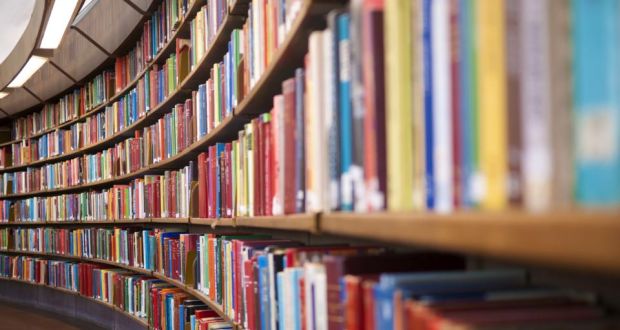
Having left the buying of the Christmas presents late again, I was walking around one of the Shopping Centers in Galway just before Christmas.
While I was there, I noticed an number of communication mechanisms taking place. As I passed the Post Office, some people were mailing letters. Further down at the Library there were a number of people sitting in front of computers and connected to broadband.
On the seats outside the Library, a group of schoolchildren were updating their friends on social media and texting furiously on their mobile phones. As all of this was going on it struck me that the written word had returned to us again through advances in modern technology!
There was a time when the old-fashioned letter was a very important and coveted source of information. It was particularly so for young people who emigrated from the shores of Ireland and would not return for a very long time, and sometimes not at all.
These letters were read and read again until the voices of their loved ones came alive in them and they became a tremendous source of comfort for many generations.
Many of you may still have bundles of these in your attic from relatives that may have since passed away. If you get a chance, why not dust them off and read through them once again, as they can be a tremendous source of therapy after such a long time.
After a while, the letters began to be replaced by the telephone. This was an effective medium for passing on information but never adequate for passing on emotions, and the majority of conversations were quickly forgotten after the receiver was replaced after the call had ended.
Thanks to the advances in technology over the past decades, we now have email, and the explosion of texting and social media interaction.
We are once again challenging people to construct sentences to carry information and convey emotion.
The written word is back and any modern technology that promotes this is well worth having. If it helps the younger generation to construct well-meaning sentences and give their opinions, it will be of major benefit to us all, and also for the continuity of civilization as a whole.
No matter how far we expand on the technology front, mankind’s innate desire for expression in words, painting and sculpture will always remain with us.
We have seen examples of this in our prehistory and later history from the cave paintings at Lascaux in France, the Egyptian hieroglyphics, Ogham stones, and the painstaking work on the early Christian manuscripts.
There was an opinion some years ago that newspapers, magazines and books would cease to exist in their current form and that we would be reading them online. This will happen to an extent but never fully.
Books are much more than books, they are a testament, in words, to generations that have since passed out of living memory.
How could we possibly live without the smell of books, to hold them in our hands, and make notes on them as we happily progress through the pages and chapters.
‘Bookworms are the most precious worms in the world when they are humans, feeding upon the paper’s body with their starving minds’ – Munia Khan.