
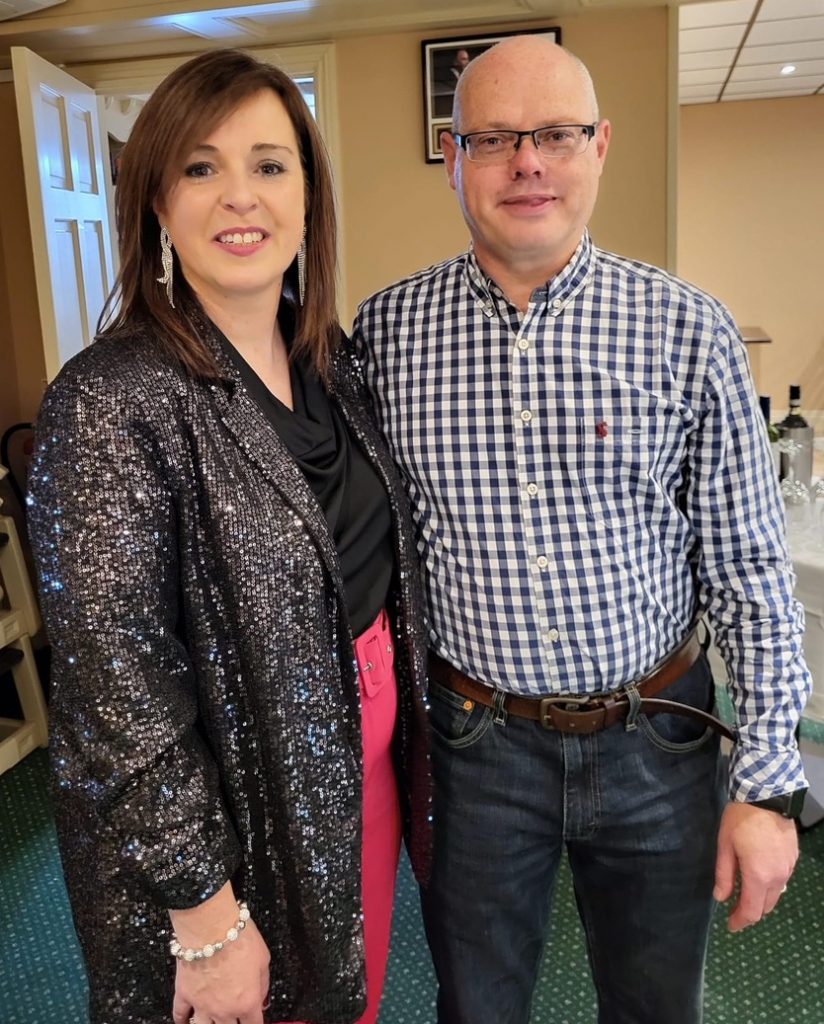
Q&A by Brad Balfour
Book: Famine In Cork City
Author: Michelle O’ Mahony
Publisher: Mercier Press , 2023
(first edition 2005)
Contact: https://omhistoryconsultant.ie
+353-(0)87-2752900
When Michelle O’ Mahony’s tome “Famine In Cork City” arrived, I didn’t fully appreciate the implications of her carefully documented study of what happened to the native Irish community during the English occupation of the Island and the Famine era (1845-1852) in particular. The historian delved into Cork City’s past and the horrible conditions of the Workhouse system where many of the destitute population was housed. Without getting into an extensive analysis here as to the whys and wherefores to England’s attempted genocide of the Irish Catholic population, the book provides a detailed look into one horrible system of oppression. In any case, it takes on a new relevance in light of the many global conflicts prompted by one dominant community’s handling of a smaller, different ethnic or religious group — take for example, China’s management of the Uighurs. But there’s more to O’ Mahony than just her book — which has been recently reissued.
Passionate about history and her mission to “Unlock the Past” for her clients. O’ Mahony offers bespoke history consultancy services to private and corporate clients through OM History Consultant. The Cork native set up her company to help to “unlock the past” for her clients, following receipt of many queries over the years. Conveniently located in West Cork along the Wild Atlantic Way, she has a particular interest in Ireland’s Famine history and in particular, its Workhouse legacy. O’ Mahony’s website blog aims to highlight different aspects of West Cork history, its people, personalities and places, written primarily to bring history to a wider everyday audience, in addition to those in heritage, tourism and education.
Michelle’s professional qualifications include a BA (Hons) in both History and English, a Higher Diploma in Education, and a Research Masters- M.Phil (Hons) in History, awarded by University College Cork. Her professional affiliations include membership of the Royal Society of Antiquaries of Ireland and the Royal Historical Society & membership of local history groups. A published author and historian with 25 years’ experience in the world of history, O’ Mahony has many links with museums, curators, depositories and other professionals in history, heritage and archaeology. She is dedicated to the preservation and conservation of heritage and history.
In addition to the heritage and tourism industries, she is dedicated to infusing her love of all things history into her projects, making history as relevant and accessible as possible for her clients, whether it be bespoke research for a family history or an ancestral query, house history, preparing interpretative signage, themed historical events and conference organization or delivering historical lectures.
The following Q&A was recently conducted through email.
Q: What initially stirred your interest in such a subject?
Michelle O’Mahony: I was always interested in history. From a young age, my paternal grandmother, Molly, told me stories concerning the War of Independence, the Civil War, the Black & Tans and much local history in Dunmanway, West Cork — where I now live having returned in 2007, after living in Cork City for a number of years. I credit Molly with instilling in me a “need to know more and to dig deeper into our history.” She told me about the Famine Graveyard in Dunmanway where many nameless victims were laid to rest having been transported from the local Workhouse at the time. She also referenced stories of her own ancestors and their famine experience. Although she heard these stories when she was young, some of the details were sketchy.
Before my grandfather and later, Molly, both died in the local Community Hospital, then St. Anthonys, I would visit them in their final weeks and look out the window at a garden littered with ruins and stones. I quickly learned the ruins and crumbled walls were the remains of the Workhouse. The front entrance had been refurbished and renovated into what was the hospital. As I looked out the ward windows to the vista of stones below, I realized that this place at one point held about 600 -800 famine victims at the height of the Famine.
I think this is where my interest in workhouse history began. Years later, having studied History in UCC under the esteemed Professor Joe Lee and written a final BA dissertation on the impact of the Famine, Professor Lee encouraged me — given my research skills and ability to “dig” — to consider a more detailed postgraduate study of the Workhouse in Cork City. This culminated in my M.Phil (Hons) (History) thesis in 2000 at University College Cork, where I also was head of the postgraduate element of the School of History and the School’s Head Tutor for a few years. I also had an interest in law and, after a few years working in the legal environment, someone asked if I ever thought about producing the thesis and rewriting it for a mass audience, given the amount of information I had uncovered.
At this time, 2005, my book was the only one that really focused on an in-depth analysis of the famine experience inside the Cork Workhouse. Many other publications wrote about the famine in general, but I was taken by Workhouse history. Perhaps, having grandparents who died in a workhouse-turned-hospital more than a century after the Great Irish Famine, informed my desire to write about the victims of these institutions. We have all heard stories of famine victims by the wayside. I felt that workhouse victims were largely forgotten, especially as those who were buried en-masse in large deep pits in graveyards linked to the workhouses. Many of these pits still exist, are unmarked and forgotten about.
No list of names exist as to who are the victims buried beneath the clay. In many cases, there’s just a sign saying “Famine Burial Ground” and little else exists. I would like to see more recognition of these burial areas. I know in Dunmanway, Fanlobbus Graveyard has about five pits, with hundreds of bodies and no doubt, some of those nameless victims would be the ancestors of many living in the town today. That seems to have been forgotten. I think seeing my grandparents in the local hospital struck a chord that their ancestors and grandparents probably had relatives and friends that died in those ruins and so this stirred my interest.
Q: How do you begin such an investigation?
Michelle O’Mahony: Similar to an archaeologist digging with a bucket and trowel, I began to dig, with paper, pencil and notebook. About 25 plus years ago, I visited the site of the Cork Workhouse (now St. Finbarr’s hospital which many Cork-Irish in New York will recognize the name) and got a feel for the location. As a historian, I like to interact and get a feel for what I am about to write and research. I am a big believer that, if you can feel and touch history, it becomes more relevant and easier to write about and understand. Following the visit, then came the painstakingly slow research of visiting Cork Archives Centre and copying down the records by hand.
The main records are the Cork Union Workhouse Minute Books. These books contain the board meetings which took place weekly. Tables and numbers were entered each Saturday as to how many males, females, children (in various age cohorts) were admitted, died or discharged. Remember, this was an era before the smartphone or digital camera, and all research was conducted by hand, in pencil only since ink was forbidden for fear of damage to the old materials. Research was slow but it was amazing to trace the records and visualize the local clerk entering these figures each Saturday during a period of mass starvation and wonder how bureaucracy continued. As I studied the numbers and indoor registers with the names and details of each inmate upon presentation at the workhouse door unfolded, so too did the thesis, and, subsequently, the book took shape.
The number crunching began, week-by-week calculating various groups and age profiling the inmates until I had the five years of the Famine compiled (1845-50). Then, I wanted to compare the famine years to a few years before the famine at the commencement of the Poor Law regime, and after the famine, to accurately assess the impact of the famine on the institution that was a workhouse.
After compiling the minute books and other workhouse documentation, it was a case of casting the net wider and doing some reading on the topic. Very little existed on Irish Workhouses at the time, John O Connor’s book “Workhouses of Ireland” was and is, one of the best books on workhouses in Ireland in a general sense. It details the Poor Law and how the Workhouses were introduced to Ireland. I wanted to go further and dig deeper into individual workhouses and their specific “in-house” experience.
I visited The Royal College of Surgeons Archives in Dublin, to locate some of the medical papers written by the doctors of the workhouse and other papers of scientific thought at the time on the famine diseases and illnesses and the articles on what could have been the origin of the “blight” that led to the potato crop failures. I consulted the National Archives in Dublin and numerous other museums. Even anonymous poems written about the famine were discovered along the way. One that has always remained with me that I refer to in my talks is the following quotation — and I use it often as an introduction to a chapter, article or lecture:
“Rattle my Bones all over the Stones
I’m a poor Pauper that nobody owns”

Q: It takes a special mindset to create a book like this with such detail. Can you explain that mindset — were you always so determined?
Michelle O’Mahony: Following on from the answer to Question One, and with the reference to my grandmother, Molly, I think that somehow she encouraged me to be determined in my mindset. She had a difficult life and even had a gun put to her head (by the Black & Tans) as she worked in a shop when they searched the premises during the War of Independence. Her resilience and stories created within me a mindset and desire to explore history and places of historical interest. The motto of my business, OM History Consultant, is “Unlocking the Past ” and I always emphasize the need to connect with our past and history to help understand where we are today and where we’re going tomorrow. I firmly believe that there’s also an element of intergenerationality to it. If something is left unanswered, it often manifests in subsequent generations to bring it to the fore or highlight various elements of history.
Determined — as regards to history and finding answers and research material — I suppose you could say that. I have always had a “determined” mindset. This manifests itself today in trying not to leave any stone unturned for my clients who request that I undertake research for them, be it genealogical or other research about history and heritage communications.
This inter-generational history is very relevant to the Irish Diaspora and especially in the USA, Australia and New Zealand where many Irish today are only finding out about their history, largely due to sites like Ancestry and Find My Past and genetic genealogy. Focusing on the details was quite tedious, but it has paid off in that it brought to the fore a legacy of the workhouses that was largely forgotten and not written about. I think today many of the Irish Diaspora community will read it and think, “W\ell that’s the type of experience and the Ireland that my ancestors left!”
Q: What were the most surprising discoveries you made in doing this book?
Michelle O’Mahony: The most surprising discovery in hindsight was the fact that my interest in Workhouses and the Famine has not dwindled. Initially, when as a student, you study something, you don’t necessarily think that this is something that will stay with you throughout your life and into your business life also.
As regards to discoveries in research, I think one of the most poignant finds was in Dublin when I read that the doctors of the workhouses’ reports to various scientific commissions — they felt so helpless and their current remedies for various illnesses just didn’t work. These reports were the equivalent to what the Lancet is to medical science today. That sense of helplessness felt by the medical professionals back in the mid-1800s was probably akin to that experienced in recent years during the Covid pandemic.
A little anecdote that I tell at talks and lectures is that, the workhouse doctor, out of sheer desperation, resorted to local remedies in the face of the Cholera epidemic in 1848/9. He advised the workhouse staff to mix whiskey and mustard seeds as a remedy to help break the famine and cholera fever. You might think this strange but in the same week, the provisions list (shopping list) for the workhouse included additional barrels of whiskey. It might raise an eyebrow and get a giggle at a talk, but it underlies the seriousness of what the doctors faced when all avenues were exhausted in terms of current medical science back then. Some discoveries stay in your mind!
Q: How were you impacted by your research and making this book?
Michelle O’Mahony: The impact was twofold. Initially, for myself as a regular person, just reading the harrowing stories and documenting the famine experience within the workhouse, it created a sense of sadness that tugged at the heart strings — especially with the chapter dealing with the experience of the Children within the Workhouse in addition to the chapter dealing with the Health and Welfare of the Inmates of the Workhouse.
Secondly, from my perspective as a professional historian now looking back to the days of my research as a postgraduate and thereafter, it impacted me in a way that I see myself as someone who gives a voice to the nameless victims of the famine and especially the forgotten inmates of the workhouse institution. Often the Poor Law regime is criticized and necessarily so. Books refer to the famine victims, but many publications don’t delve deeply enough, I believe, to ascertain the identities of many of the famine victims. In a certain way perhaps, I am recognizing their memory, their lives and recording their existence, that they are not just nameless bodies in the many pits surrounding the workhouses.
In other publications, books, newspaper articles etc which I contribute to, I tend to highlight the forgotten and nameless victims. I contributed to the definitive collection on the Irish Famine — The Atlas of the Great Irish Famine , 2012 published by Cork University Press. This has had many re-prints. I also got involved in local Famine Commemorations and, in September 2022, was instrumental in designing interpretive signage at the local Workhouse/Hospital in Dunmanway, documenting the history of the area. It’s very difficult when you know what these individuals went through in a particular area and when you walk on the ground — now a lawn or a pavement — and realize that there could be — or is — famine victims underground. You are literally walking in their shoes, in some ways. I feel I am giving them a voice and acknowledging their existence and their suffering. Maybe they can now rest in peace.
These impacts also perhaps made me more sensitive to the needs of my other clients which I assist with their genealogy, especially clients who were adopted or who need my assistance to find out how they came to be in the Magdalene Laundries in Ireland or assist people to find out their biological parentage. These can be very sensitive cases and in a way, the research for the book many years ago, gave me a good foundation for the consultancy work I now undertake.
Q: Where do you go from here — what are your future projects?
Michelle O’Mahony: After years of research and heritage involvement, I set up OM History Consultancy in February 2022, offering a wide range of history and heritage consultancy services, including genealogy, research, communications and pr, media, mentoring clients in writing a history/ non-fiction books etc. I would like to further extend the business profile as one of my future projects.
I am also a regular columnist for the Whatson in West Cork monthly guides and the quarterly Irish Foodie publication. These columns are aimed at making history accessible to a wider audience and are usually themed to current events such as St Brigid, Women’s Christmas etc. I would love to contribute for an American based publication and bring a little bit of home stateside for the diaspora!
I have a few ideas in mind for a few blog posts. One in particular concerns the artist Tom Hovenden who was born in Dunmanway and is one of America’s foremost painters with his work in the Met in NY and in Philadelphia. He was a famine orphan and championed the rights of the African-American community. He was one of the first painters to paint them in their homes; he’s a fascinating character. This really links Black History Month (February) and the Irish Famine Experience. I must be the only person in West Cork to have three framed prints of his work in my home: “The Last Moments of John Brown” and “Chloe & Sam” with another waiting to get framed.
As regards to books, I have two in mind, I will keep you posted on these; they’re under wraps at the moment.
In the immediate term, I will be volunteering my services re media and communications to assist with a local Festival called Feel the Force Dunmanway, where “Star Wars” Cosplayers and enthusiasts from all over Ireland are expected in June for a two-day event. One of the world’s biggest fans with the biggest memorabilia collections lives in the area and the project is his brainchild.
In the long term, a friend of mine has composed a Famine Song about the nameless victims inspired by my research and I would like to see if I can assist in getting that recorded and distributed. It really personifies the famine experience and the wider Irish Diaspora.
One other interesting blog post your readers may like is about Larry O Brien, Witness to an assassination. He was JFKs best friend and Postmaster General. This is already on my blog; do take a look!