
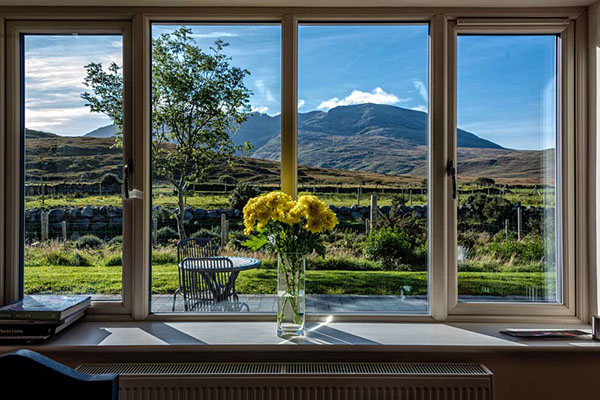
 Glen Keen is one of Ireland’s largest working farms (it’s in the top 20 size with a size over 1700 acres). It is set in a stunning location at the gateweay to the Connemara region, nestled at the foot of the Sheaffrey Mountains with the towering Mweelrea (Connaught’s tallest peak) as its backdrop. Glen Keen is in an EU designated special area of conservation, the land still retains the ecology of the Ice Age!
By the early 1600s less than 5% of Irish people owned land in Ireland, Britain owned 95% of all of the land in Ireland and controlled the country. The land was divided into large estates owned by British Landlords who charged the Irish Tenants rent for small pieces of property on the estate.

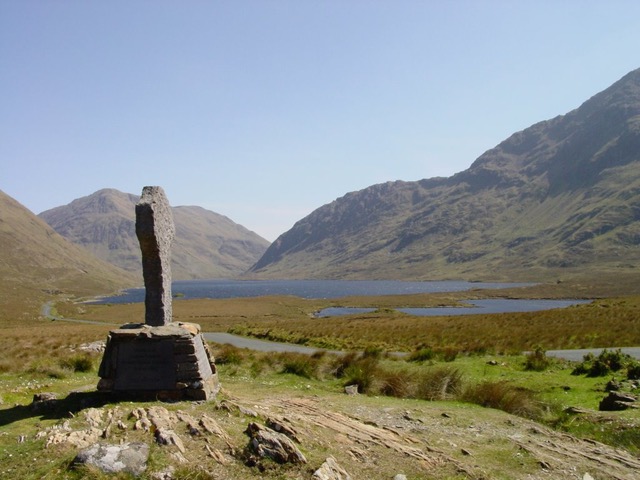
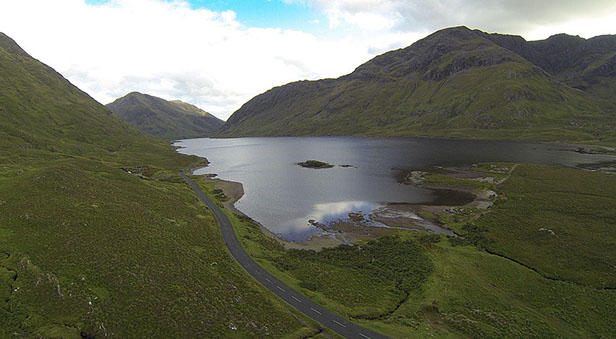
The Great Hunger of the 1840s devastated the region and by 1851 the Glen Keen population had plummeted to 31 males and 34 females. The property under the Glen Keen Estate runs through the Doo Lough Valley where a monument was erected in honor of the Victims of the Great Hunger. A Cilin Burial site is also located on the estate property, it’s most recent use was for the burial of unbaptized infants, prior to that it was a place of burial for the victims of Famine.
Landownership in early 19th century Ireland was the preserve of a small minority; the overall population in 1804 was slightly under 8 million of whom no more than 10,000 were land proprietors. Confiscations through Plantations and later under Cromwell, Charles II, William III and the Penal Laws had by the late 1770s resulted in Protestants owning 95% of Ireland’s total acreage.
Many landlords were absentees and allowed middlemen to run their estates. There was an over-dependence on the potato as a staple food and between 1816 and 1842 there were at least 14 partial or general failures of the potato crop.
In the late 1700s Philip O’Malley, Catherine O’Grady’s Great, Great, Great Grandfather and others had arrived in the Glen Keen area, having endured forced migration from north Connemara.
Luckily Catherine’s ancestors had some coins buried in their garden which, gave them the means to move to another holding.
 The family moved to Bouris which was not part of the Lord Sligo estate and was owned by Sir Roger Palmer. Their family continued to do well and there were two priests in the family, Fr. William O’Malley who went to the USA where he became a Catholic Priest in the Rocky Mountains and his brother Fr. John O’Malley who stayed in Ireland. It was Fr. John who was the chief organizer of the struggle that bought Captain Boycott to his knees in Ireland, this event won a noted victory for the Land League in Ireland and invented the word ‘Boycott’! There is a monument dedicated to the memory of Fr. John, Catherine’s Great Gran Uncle, it is located in the Neale near Ashford Castle, Co. Mayo.
In 1885 the Ashbourne Land Act prepared the way for tenant proprietorship. The Wyndham Act of 1903 led to the abolition of landlordism and the tenant farmers were becoming the owners of their holdings.
Hugh O’Grady and his wife Margaret (nee Mc Namara), who was grand-daughter of the evicted William O’Malley, a Tenant at Glen Keen, purchased the present Glen Keen property through a land purchase agreement with the Land Commission. Margaret had received some assistance for the deposit from her Uncle’s Fr. William and Fr. John.
Hugh and Margaret together with their young family moved to the former Marquis of Sligo’s Farm Manager’s House at Glen Keen in 1922. Hugh passed away in 1948 and Margaret continued the Land Purchase payments and looked after the farm with the help of her family, Catherine’s dad Peter and his brother’s and sisters who emigrated to America and continuously sent funds home to support Glen Keen. There are a number of historical documents and Land Purchase receipts on display at the visitor center at Glen Keen.
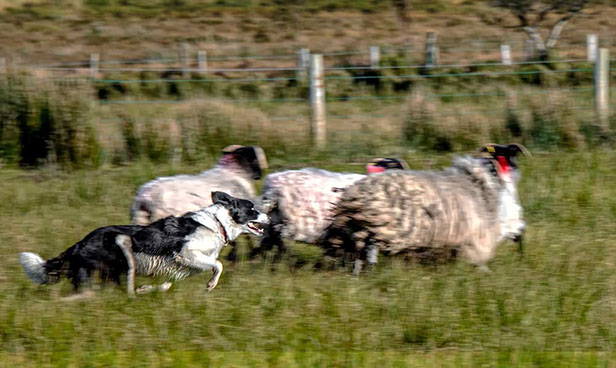 Margaret passed away in 1970 and her son’s continued to run and operate the large estate at Glen Keen. The farm was stocked with mountain sheep, cattle, horses and poultry.
It is Margaret’s grand-daughter Catherine and her husband Jim who are the current owners of the Glen Keen Estate.
After her 3rd level studies Catherine went to work in London for Ryanair and Royal Brunei Airlines. She met Jim an American Pilot and moved to the USA after their engagement. Catherine’s uncles asked them if they would consider returning back to Glen Keen and taking over the running of Glen Keen. There was little convincing for Catherine, she always had a longing for home and Jim thought it would be a great idea to live in the west of Ireland in such a pristine and beautiful setting. They both worked fulltime while investing in the upgrade of the farm and developing more sustainable and diverse routes for this majestic place they call home, Glen Keen Estate.
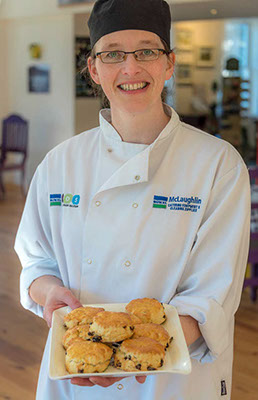 In addition to operating the working sheep farm, in 2014 cooinciding with the launch of the Wild Atlantic Way, Jim and Catherine opened a purpose built state of the art Visitor Center where they welcome guests from all over the world to enjoy Irish experiences from sheepdog herding demonstrations, cultural walking tours of the bronze age sites and pre-famine cluster of homesteads and the abandoned/unharvested Potato ridges from the 1800s, wool spinning, Irish music and dance experiences, Irish Coffee, soda bread and scone making and traditional turf cutting events. The events are fun and immersive, transporting the guests back in time, providing a tactile connection, walking in our ancestor’s footsteps.
During the pandemic Catherine and Jim adapted their experiences to online virtual events direct from Glen Keen on the west Coast of Ireland. They also broadcast a weekly ‘Discover Hidden Ireland’ series on the Glen Keen Farm Facebook Page and on their You Tube Channel and they share wonderful moments on Instagram @glenkeenfarm.
They will be launching a new website very soon at www.glenkeenfarm.com!
When we can travel again, a Cead Mile Failte awaits you at Glen Keen Farm.