

Interview by Mike Greenly
The topic of growing older is about as universal as one can imagine. Being no spring chicken myself, I often think about growing older — while still loving the zest and commitment I feel for everything I do in life. But aging doesn’t daunt me. And in light of impact that the coronavirus crisis has had on the aging — in nursing homes, for example — my awareness actively includes the circumstances in such places.
Joe McKay, my Irish American friend, happens to live in a retirement community (Peconic Landing in Greenport, NY) that has an affiliation with Masterpiece Living. This network of assisted living communities is committed to helping older adults age in a better way. Joe has been a longtime friend and colleague for decades – we were executives together in my previous corporate life. He’s always had very high standards of excellence. If Joe is happy and impressed with the experience he’s encountered in his living facility, then I know it represents quality.
So Joe introduced me to the Landry brothers, Larry and Roger — who provide services to his retirement community and many others — when he heard a song I wrote in collaboration with singer/composer Grant Maloy Smith, “I See You.” Recently, when this Billboard Top 10 recording artist in the American Roots genre was performing around the country, he overheard from an older woman during his travels. Sadly and with some bitterness, she complained that she felt “invisible” to younger generations. In effect, they automatically dismissed her existence as being irrelevant, because of her age. Our song was inspired by her comment [https://youtu.be/GHaOsRHKkVg].
When I’m not writing presentations for corporate execs and their teams, or coaching their on-stage performance, I use words as a lyricist. “I See You” was created by Grant and myself as a message to that woman and everyone like her: that they aren’t “invisible” and that she is valued. Her life matters as well.
Joe thought the Landry brothers should hear the song, given their work with the quality of life of people who are aging. I relate to that prejudice directly. Clients often tell me they can feel the positive difference that my prior experience makes, having myself been a successful Fortune 500 Marketing/Communications VP.
Yet, I’ve experienced ageism behind my back. An agency executive privately acknowledged the excellence of my work but expressed a desire for a “cute 30-year old” to make a sales pitch to a potential client. That is Ageism. It’s also ageism when someone is disqualified for being “too young” regardless of their abilities and what they can offer.
Well, in addition to their ongoing work for older adults, Masterpiece Living is developing an incredible anti-ageism campaign for the public. Amazingly, they adopted my song as its title and theme: “I See You.” I’m proud and excited about their reaction; I’m honored if my song can help reduce the prejudice of ageism.
Incidentally, the Irish are currently ranked 16th in the world for longevity (82.1 years old.) The United Kingdom comes in at #29 (81.2 years.) And the USA ranks #34 in life expectancy (78.9.) By the way, women consistently last longer than men.
So, in order to learn more about what these two pros are working on that may help the future be better when you’ve aged in your own life, I spoke with them for further insight.
Q: What made you establish Masterpiece Living? Why the name and how did the organization come about?
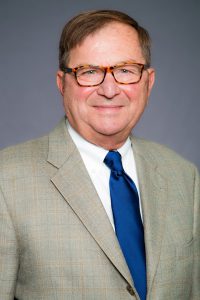 RL: Larry was Chief Investment Officer of the MacArthur Foundation [Larry, pic: right] when they did a famous ten-year study on aging. When the results were in – showing, clearly, that lifestyle is the major determinant of how we age – Larry had a conversation with famous Board member, Jonas Salk. Dr. Salk felt it was very important that these surprising results had to be applied – turned into action – if they were going to benefit the world.
LL: Several years after my conversation with Dr. Salk, I put together a group to explore turning our learnings about lifestyles into action. The group included two members of the MacArthur Study Team, a number of senior living experts and Roger. My brother had spent a career in the Air Force as a flight surgeon and preventive medicine specialist. After retiring, he was ready for another challenge and I was delighted to provide it for him!
RL: The “Masterpiece Living” name came from a brainstorming session with the exploratory group that Larry had put together. We felt we were attempting to help anyone make their life a living “masterpiece.”
Q: How do you suggest that people reading this view their own futures and getting older?
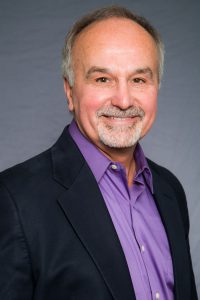 RL: Optimistically! Since lifestyle is the major determinant of how we age, and lifestyle is the result of our choices, we actually can choose to live a life of high quality and function. Indeed it’s never too late, or even too early, to make the choice to move more, to keep learning, to stay connected to others and to find meaning and purpose in our lives, regardless of our age. Making healthy lifestyle choices isn’t rocket science: it doesn’t require heroic deeds. Anyone can live a long life of high quality! [Roger: pic, right]
Q: What do you hope to accomplish with Masterpiece Living? What will make you feel that you’ve been or are being successful?
LL: Well, that question gets to the heart of the matter. We want to inspire and cultivate individual growth, resilience and purposeful longevity. And yes, we’ve initially focused on older adults because Jonas advised me to start there, but the truth is: we want to influence all lives. Our sweet spot is to help people live longer at high quality … what we call the compression of morbidity (limiting the time that we are sick and impaired.)
Q: What are the plans and hopes for your anti-ageism campaign? What do you want to accomplish?
RL: What we expect or believe is possible is critically important. Henry Ford said “If you think you can do something, or you think you cannot … you’re probably right.”
LL: Ageism lowers expectations. It can cause the culture of a society to see older adults as broken humans. And it can cause us as individuals to see ourselves as spent. Those views essentially shelve the critically valuable human capital that lies untapped in our older adult population. Lowered expectations of what older people can contribute is the formula for societal decline and desperation.
RL: We want to spotlight the fact that – regardless of what your age might happen to be – you are not yet done with the possibility of growing, giving back and savoring life until you no longer have a pulse.
Q: So now as we close this interview. I’m curious about any Irish connections you may each happen to have. And of course, a number of the residents in the facilities you support are Irish Americans, themselves.
RL: Everyone has some Irish in them, don’t they? If not from DNA, then in their love of music, dance, storytelling or gab. Our mother was Irish, perhaps second generation? My wife is second generation from Rathmore in County Kerry. A visit to Ireland a couple of years ago, cemented a connection with all that is Irish. I anticipate many more visits.
LL: Besides Mom’s being second generation, I have a strong spiritual connection to Ireland. It’s the number one place I like travel to outside the US. I’ve enjoyed many trips there – always involving golf, good friendship and laughs. We have a group of eight Americans who meet up with eight Irishman. It’s all organized by John O’Sullivan – owner of the famous Dublin Restaurant, Roly’s. We compete on the course and entertain ourselves with sing-alongs in the evening. The Americana have been taught many local patriotic Irish songs.
Q: How can people learn more about you?
LL: Our website is a great place to start: https://mymasterpieceliving.com